




TL;DR: Clay and Exa are powerful AI research tools for B2B outreach — Clay aggregates 50+ data sources for lead enrichment, while Exa surfaces hard-to-find contacts through semantic web search. But both stop at the list. Lessie AI completes the stack by handling discovery, personalized outreach, and follow-ups in one workflow — turning research into real conversations.
If you’ve been building a modern B2B outreach stack, you’ve probably heard the names Clay and Exa floating around. And for good reason. Clay has positioned itself as the go-to for AI-powered lead enrichment and workflow orchestration, allowing sales teams to pull from 50+ data sources and automate research at scale. Exa, on the other hand, focuses on AI-driven lead discovery with a search engine designed to surface relevant people and companies across the web.
Both tools are impressive. They solve a real problem: the hours sales reps waste bouncing between LinkedIn, company websites, and spreadsheets just to find who to contact. With Clay, you can ask it to find “VP-level finance leaders who joined Rippling in the last 6 months,” and it delivers a list of verified contacts. Exa does something similar, pulling from its automated lead discovery pipelines to help you pinpoint your ideal customer profile.
But here’s the thing I kept running into: research is only half the battle. Finding a list of names and emails doesn’t mean you’ve actually connected with anyone. You still need to draft personalized outreach, manage follow-ups, and track who actually responds. That’s the missing execution layer — and it’s exactly why Lessie AI caught my attention.
Clay — The Workflow Orchestrator
Clay markets itself as an AI-native GTM platform that combines data enrichment with workflow automation. Its superpower? Aggregating data from dozens of sources and letting you build custom research workflows without code.
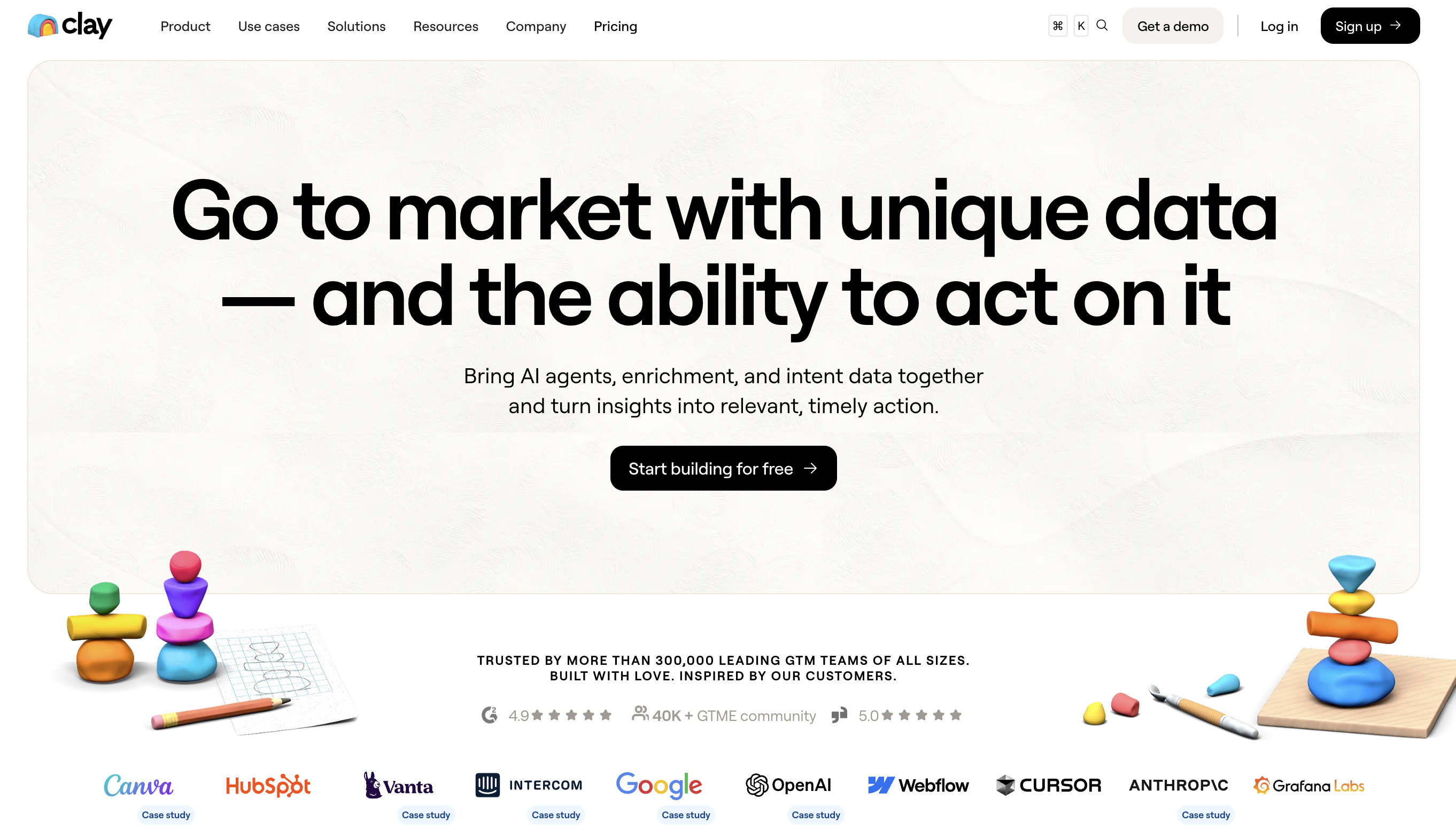
Key Features:
- Access to 50+ integrated data providers (Apollo, Clearbit, ZoomInfo, etc.)
- AI-powered contact enrichment and verification
- Visual workflow builder for custom prospecting sequences
- Native integration with ChatGPT for conversational research
- Real-time synchronization with CRMs
Clay excels at scale. If you need to research 1,000 accounts and pull decision-maker contacts with verified emails, titles, and recent activity signals, Clay can do it in minutes. Its recent ChatGPT integration means reps can now run research directly in their chat interface — asking things like “Use Clay to find product execs who joined Rippling in the last 6 months.”
| Strengths | Weaknesses |
|---|---|
| Massive data coverage (50+ sources) | Steep learning curve; requires workflow setup |
| Enterprise-grade enrichment | No native outreach execution |
| Strong CRM integrations | Pricing starts at $149/user/month |
| Visual workflow builder | Best for teams with dedicated ops support |
Bottom Line: Clay is a research engine on steroids. It gives you everything you need to build a hyper-targeted prospect list. But once that list is ready, the ball is in your court to actually do something with it.
Exa — The AI Search Engine for Discovery
Exa takes a different approach. Rather than aggregating pre-existing databases, Exa positions itself as an AI-powered search engine that discovers leads by understanding context and intent.
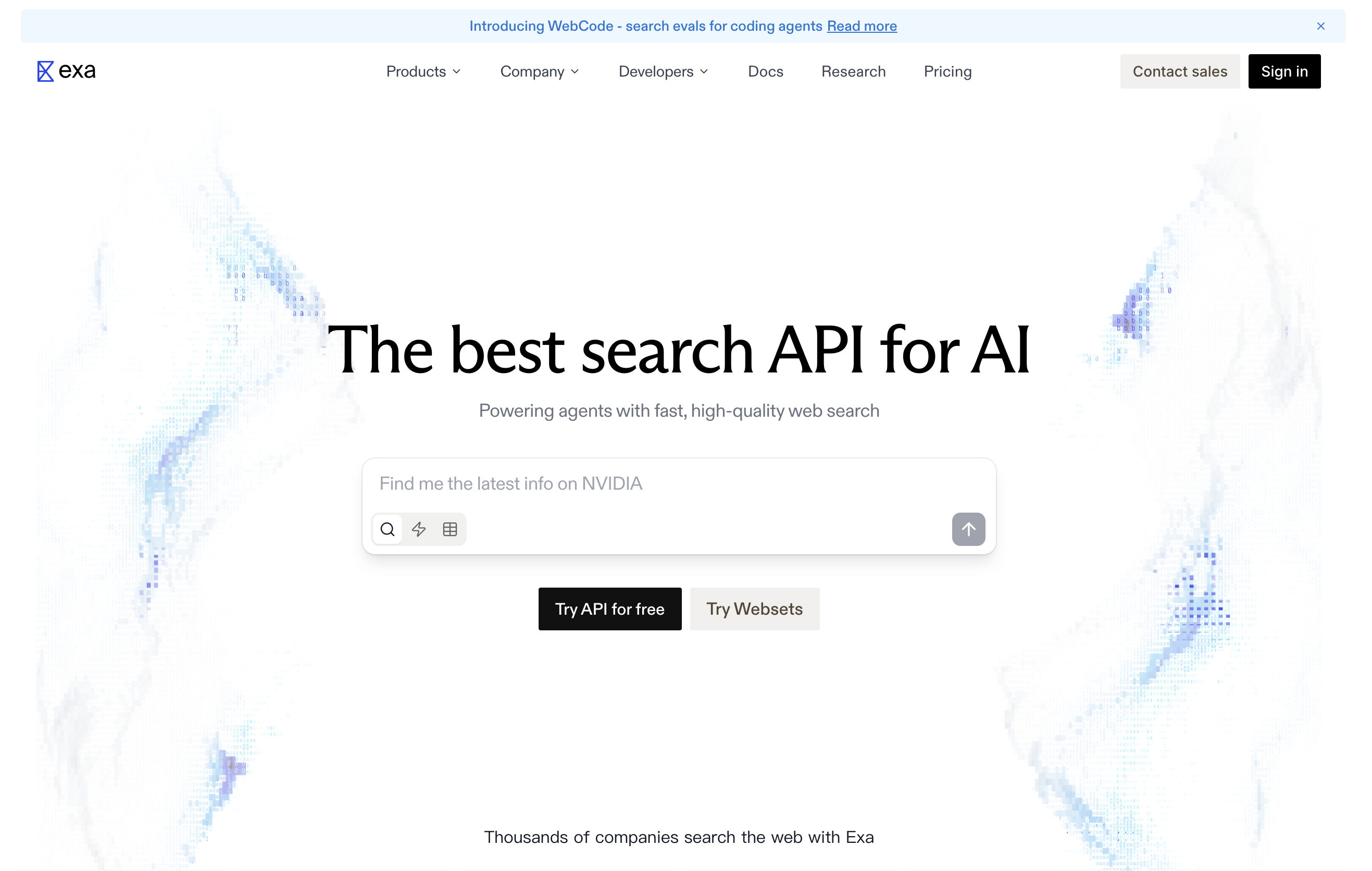
Key Features:
- Semantic search for people and companies
- Automated lead discovery pipelines
- Real-time web crawling and enrichment
- Intent signal detection
Exa shines at discovery in less-structured environments. If you’re looking for niche experts, researchers, or people who don’t have polished LinkedIn profiles, Exa’s search engine can surface them from conference speaker lists, academic papers, and public forums. It’s particularly useful for technical recruiting and specialized B2B niches.
| Strengths | Weaknesses |
|---|---|
| Uncovers non-obvious leads from diverse sources | Less structured than traditional data providers |
| Strong for technical/niche verticals | Limited workflow automation |
| Real-time discovery signals | No native outreach capabilities |
| Lower entry cost | Smaller data coverage compared to Clay |
Bottom Line: Exa is your go-to for finding people who don’t show up in standard B2B databases. It’s discovery-focused by design — which means it shares the same blind spot as Clay: research without execution is just a list.
The Common Gap: Research Without Execution
Both Clay and Exa solve the discovery problem exceptionally well. They help you find the right people faster than any manual process ever could. But neither tool helps you actually connect with those people.
After building a list of 50 highly-targeted prospects, you’re still staring at:
- No automated way to draft personalized emails
- No intelligent follow-up sequencing
- No feedback loop on who responded and who didn’t
- No way to know if your outreach actually worked
This is what I mean by the missing execution layer. Every tool in the Clay/Exa ecosystem assumes you’ll pick up from the list and execute manually — or bolt on a separate outbound sequencer. That’s exactly the gap Lessie AI was built to close. See also: Apollo vs Clay: B2B Pipeline for a deeper look at how research tools stack up.
Lessie AI — The Execution Layer That Completes the Stack
If Clay and Exa are research tools, Lessie is a relationship engine. It’s designed to handle the full B2B outreach workflow: finding the right people, understanding them, and actually making the connection happen.
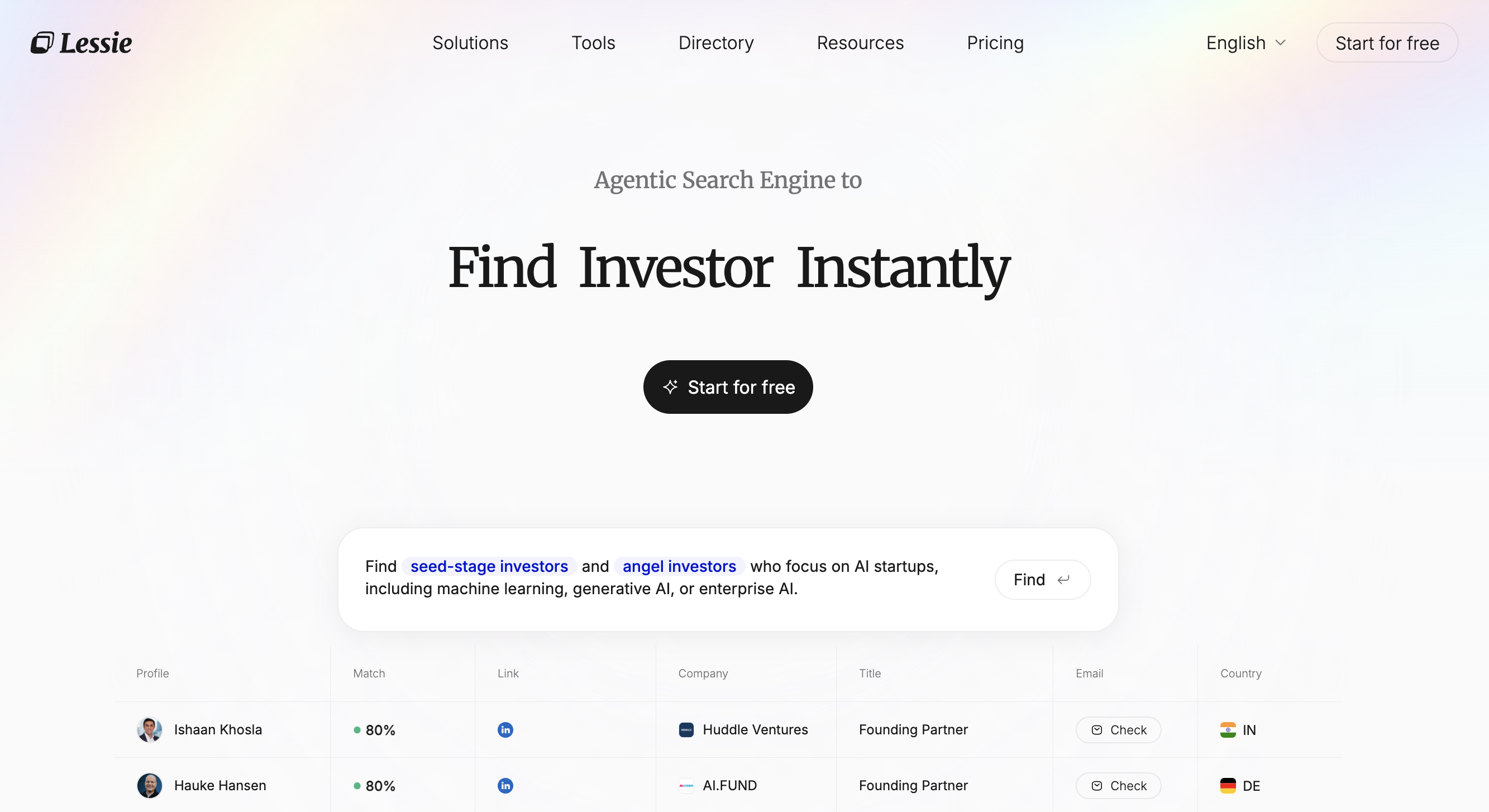
Lessie positions itself as the world’s first multi-scenario People Search AI Agent. But that description undersells it. After testing it, I’d describe Lessie as an AI that handles the entire outreach lifecycle — from discovery to first conversation.
The Core Workflow:
- Identify — You describe who you’re looking for in plain language: “product managers at fintech startups in Europe” or “podcast hosts who cover climate tech.”
- Source — Lessie searches across professional networks, public databases, social media, conference speaker lists, GitHub, and more.
- Review — It cross-checks emails, filters out bounces, scores relevance, and ranks candidates.
- Connect — Lessie crafts personalized outreach messages, sends them at optimal times, and handles follow-ups automatically.
Where Lessie Outperforms
1. It Actually Sends the Outreach. Clay gives you a list. Lessie gives you a conversation. After it finds candidates, Lessie drafts personalized emails referencing specific achievements or shared context — then sends them. No copy-paste. No manual sequence setup.
2. It Manages Follow-Ups Automatically. One of the biggest reasons outreach fails? People give up after one email. Lessie handles polite follow-ups without you lifting a finger, dramatically improving response rates without increasing your workload.
3. It Learns from Responses. Every reply, meeting, or “not interested” feeds back into Lessie’s model. Who responded well? Which messaging worked? Over time, Lessie becomes more effective at both finding and engaging your target audience.
4. Multi-Source Discovery Beyond LinkedIn. While Clay relies heavily on structured B2B databases, Lessie hunts across platforms — YouTube, GitHub, academic publications, conference speaker lists — making it better for niche or specialized verticals. This is the same advantage that makes influencer discovery one of Lessie’s strongest use cases.
What the Experience Actually Looks Like
I tested Lessie with a real-world scenario: finding “podcast hosts in Europe who cover climate tech and have an audience of 50K+.”
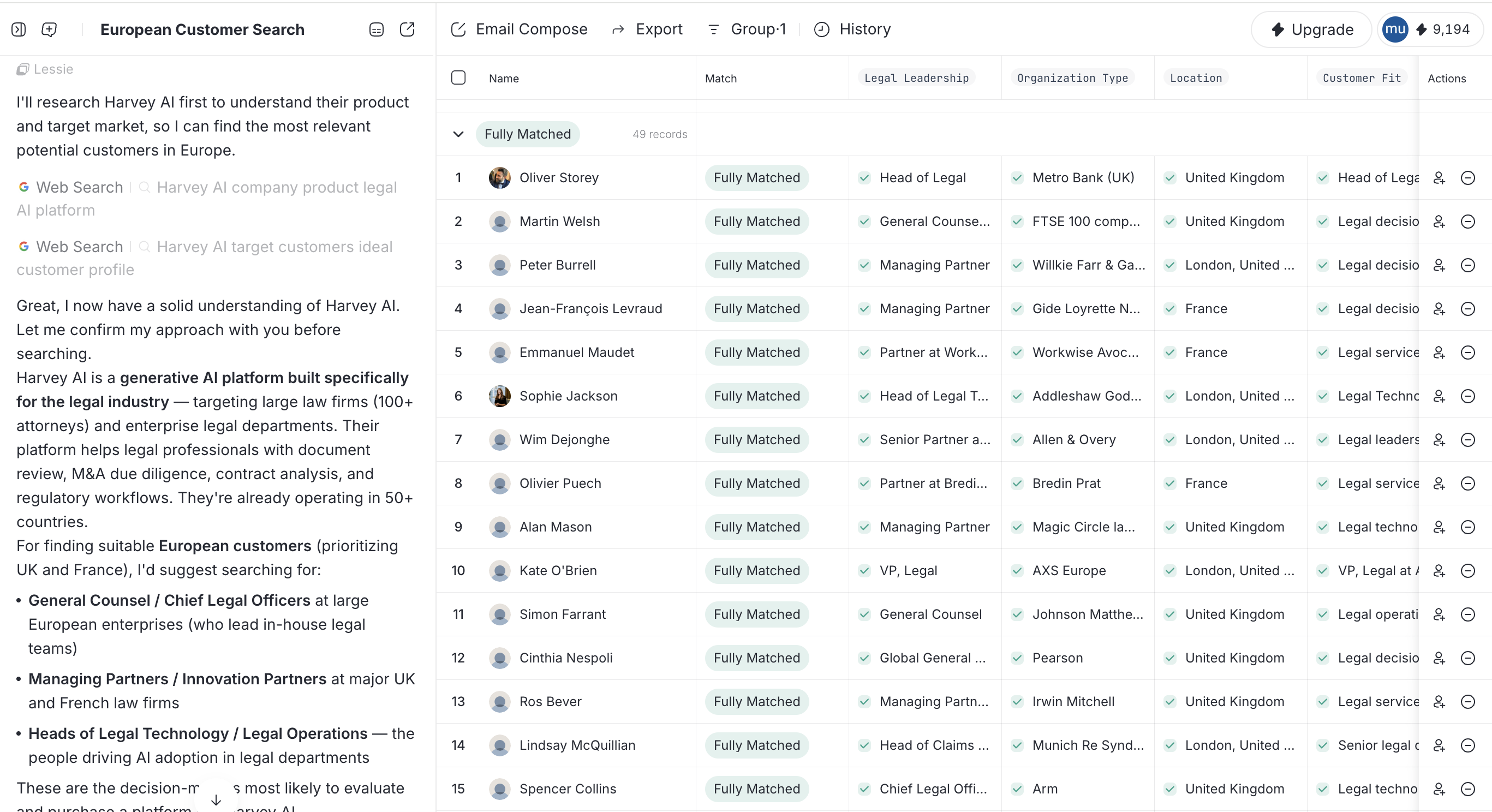
Within 20 minutes, Lessie had identified 15 relevant hosts, pulled their email addresses and podcast platforms, drafted personalized pitches referencing specific episodes, and scheduled the first batch of outreach. A task that would have taken 3–4 hours of manual research and writing was done while I focused on other work.
No tool is perfect, and Lessie has its own limitations. In some cases — particularly with non-English markets or highly niche technical searches — the results can require human verification. The product team acknowledges this: Lessie is actively improving its coverage in smaller languages and niche verticals. For most mainstream B2B use cases (SaaS, finance, e-commerce, marketing), the accuracy is excellent.
Building the Complete B2B Outreach Stack
Let’s step back and look at the big picture. Each tool in this stack has a distinct role:
Clay — The Data Aggregator
Build massive, enriched prospect lists from 50+ structured databases. Best for teams that need scale and CRM-grade data quality.
Exa — The Discovery Engine
Find people who don’t show up in traditional B2B data sources. Best for niche verticals, technical recruiting, and intent-signal hunting.
Lessie — The Execution Layer
Takes research output from any source and handles the full outreach lifecycle: drafting, sending, following up, and learning from responses.
The Result — A Complete Pipeline
Discovery → Enrichment → Outreach → Response. The first stack that takes you from target to conversation without switching tools mid-workflow.
For B2B outreach teams, the winning formula looks like this: use Clay or Exa for research, and use Lessie for connection. Whether you’re doing B2B lead generation, influencer partnerships, or expert sourcing, the stack works the same way. Research identifies who to reach. Lessie makes sure you actually reach them.