




What Makes an Influencer Commercially Valuable?
The platform-specific metrics below are not arbitrary. They reflect recurring filters and thresholds used by decision-makers when evaluating influencer profiles. These signals consistently appear in influencer discovery and assessment workflows across different industries. Brands assess based on audience size, interaction depth, content relevance, and conversion potential.
Here’s a breakdown for major platforms (focusing on mid-tier influencers suitable for B2B or niche markets):
- Instagram (Ins): A visual powerhouse for lifestyle and product showcases. Commercial value lies in aesthetic consistency and storytelling. Ideal metrics: 50K-500K followers, engagement rate >3% (likes + comments). Brands prioritize cohesive feeds, like fashion or beauty, where Reels drive direct sales.
- Twitter (X): Real-time hub for thought leadership and trends. Value comes from viral amplification and opinion sway. Standards: 100K+ followers, average post interactions >500 (retweets + replies), repost rate >5%. Brands seek timely content, such as tech or finance commentary, to boost visibility.
- TikTok: Short-video engine fueled by entertainment and algorithms. High commercial worth in youth demographics and quick conversions. Targets: 200K-1M followers, average video views >100K, engagement >10% (duets + shares). Brands evaluate challenge-style or tutorial content for FOMO (fear of missing out), like fitness routines.
- YouTube: Long-form content for in-depth tutorials and vlogs. Strength in SEO and loyal subscribers. Benchmarks: 100K+ subscribers, average watch time >50%, like rate >4%. Brands value educational videos, such as tech reviews or investment guides, for mid-roll ads and collaborations.
- Facebook: Community-focused for broader demographics. Value in group interactions and event promotions. Ideals: 50K+ followers, post engagement >1% (shares + comments), high group activity. Brands favor localized content, like lifestyle or e-commerce tips, to spark offline conversions.
- Reddit: Anonymous niche discussions emphasizing authenticity. Commercial edge in organic trust-building. Standards: Active in relevant subreddits, karma >100K, post upvotes >1K. Brands assess AMAs (Ask Me Anything) or stories for community resonance, using subtle integrations over hard sells.
These criteria guide your focus: Start in a niche, build cross-platform synergy, and attract paid gigs.
From Beginner to Valuable Influencer: A Phased Roadmap with Actionable Steps
Becoming an influencer is a structured journey. The phases below reflect common growth patterns observed across creators, rather than guaranteed outcomes.
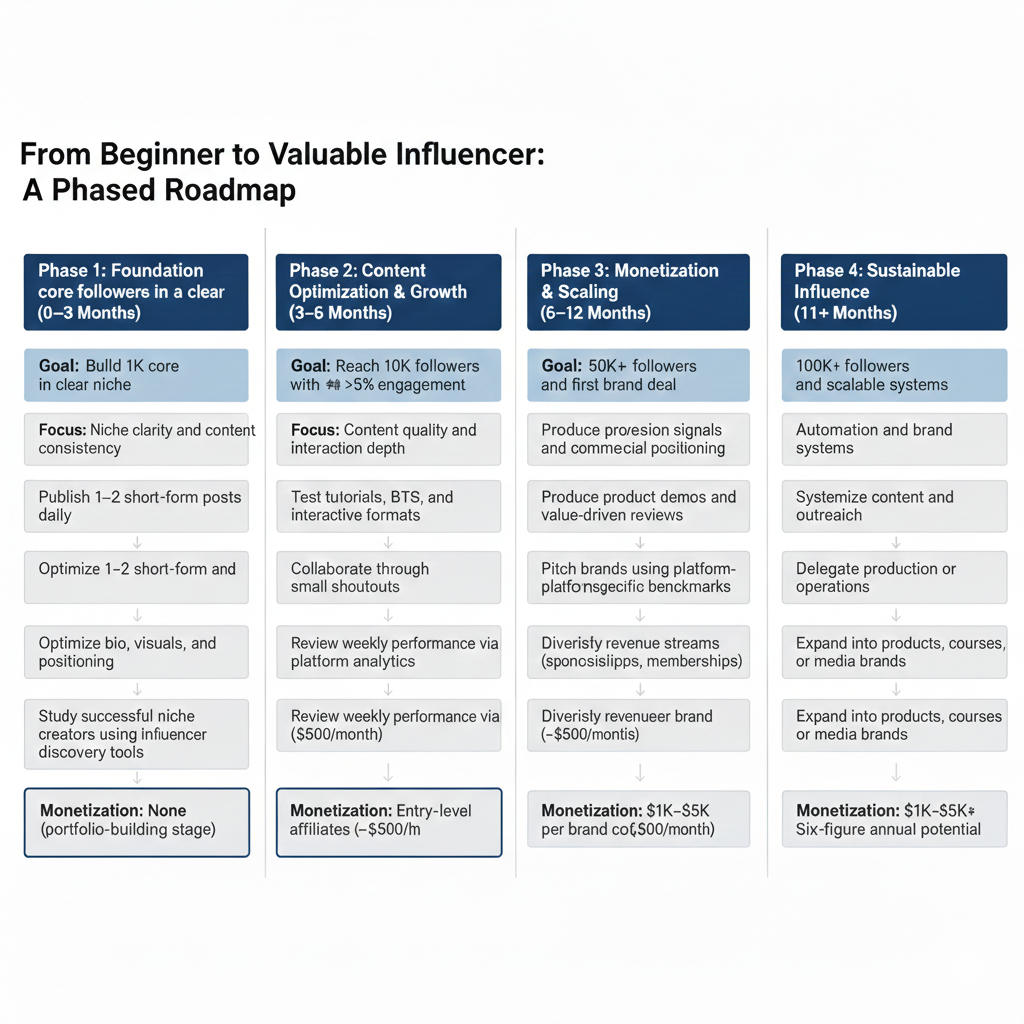
Phase 1: Foundation Building (0–3 Months)
- Goal: Build 1K core followers in a clear niche
- Focus: Niche clarity and content consistency
- Actions:
- Publish 1–2 short-form posts daily
- Optimize bio, visuals, and positioning
- Study successful niche creators using influencer discovery tools
- Monetization: None (portfolio-building stage)
Phase 2: Content Optimization & Growth (3–6 Months)
- Goal: Reach 10K followers with >5% engagement
- Focus: Content quality and interaction depth
- Actions:
- Test tutorials, BTS, and interactive formats
- Collaborate through small shoutouts
- Review weekly performance via platform analytics
- Monetization: Entry-level affiliates (~$500/month)
Phase 3: Monetization & Scaling (6–12 Months)
- Goal: 50K+ followers and first brand deal
- Focus: Conversion signals and commercial positioning
- Actions:
- Produce product demos and value-driven reviews
- Pitch brands using platform-specific benchmarks
- Diversify revenue streams (sponsorships, memberships)
- Monetization: $1K–$5K per brand collaboration
Phase 4: Sustainable Influence (12+ Months)
- Goal: 100K+ followers and scalable systems
- Focus: Automation and brand expansion
- Actions:
- Systemize content and outreach
- Delegate production or operations
- Expand into products, courses, or media brands
- Monetization: Six-figure annual potential
Real-World Influencer from Lessie AI’s Influencer Lists: Unlocking Commercial Opportunities
Lessie AI shines in practicality, generating custom lists via prompts to help brands find influencers while inspiring creators. Here are examples from client-provided lists with individual profiles at:
- TikTok Fitness Influencers (US/Canada): Creators with 100K+ followers and ~15% engagement often succeed through challenge-style content. Brands use these profiles to drive sportswear conversions, while beginners can model niche consistency and content format to grow and monetize over time.
- YouTube Tech Influencers (Global): Focused on gadget reviews with 200K+ subscribers and high watch times. Example: A creator lands tech brand deals through in-depth unboxings. Tip for being an influencer: Beginners upload weekly tutorials, targeting >5% conversion.
- TikTok Finance/Investment Influencers (US): Short explainer videos on stocks/investments garner millions of views. FinTech brands love the trust factor. Creators: Use simple animations for hot topics, monetize with affiliate links.
- Twitter(X) Crypto/Web3/DeFi Influencers: Real-time tweets spark discussions with 50K+ followers. Example: Sharing DeFi trends attracts NFT collaborations. How to become: Beginners post daily insights, join AMAs for earnings.
- Twitter(X) Beauty Influencers: Viral makeup tips with high retweets. Brands scout for product pushes. Path: Share user-generated content, start with small brand collabs.
These lists bridge supply and demand, showing how Lessie AI fuels find influencer searches and creator inspiration.
Lessie AI: The Ultimate Influencer Search AI Assistant
Lessie AI Assistant is an exceptional people search tool, tailored for scenarios like find influencers. Its key features: Users input one prompt to generate a group of matching profiles in a list, then click into detailed individual homepages. It supports multi-scenario solutions: Find Influencer, Find Client, Find Investor, Find Talent, Find Partner, and Find Coach.
In your journey to being an influencer, Lessie AI is more than a tool—it’s your guide to finding influencers for inspiration and optimizing how to become an influencer and make money. Try it today and elevate your influence!
Disclaimer: Lessie AI provides data-driven insights, not financial guarantees. Income examples are illustrative and vary based on platform, niche, consistency, and market demand.