




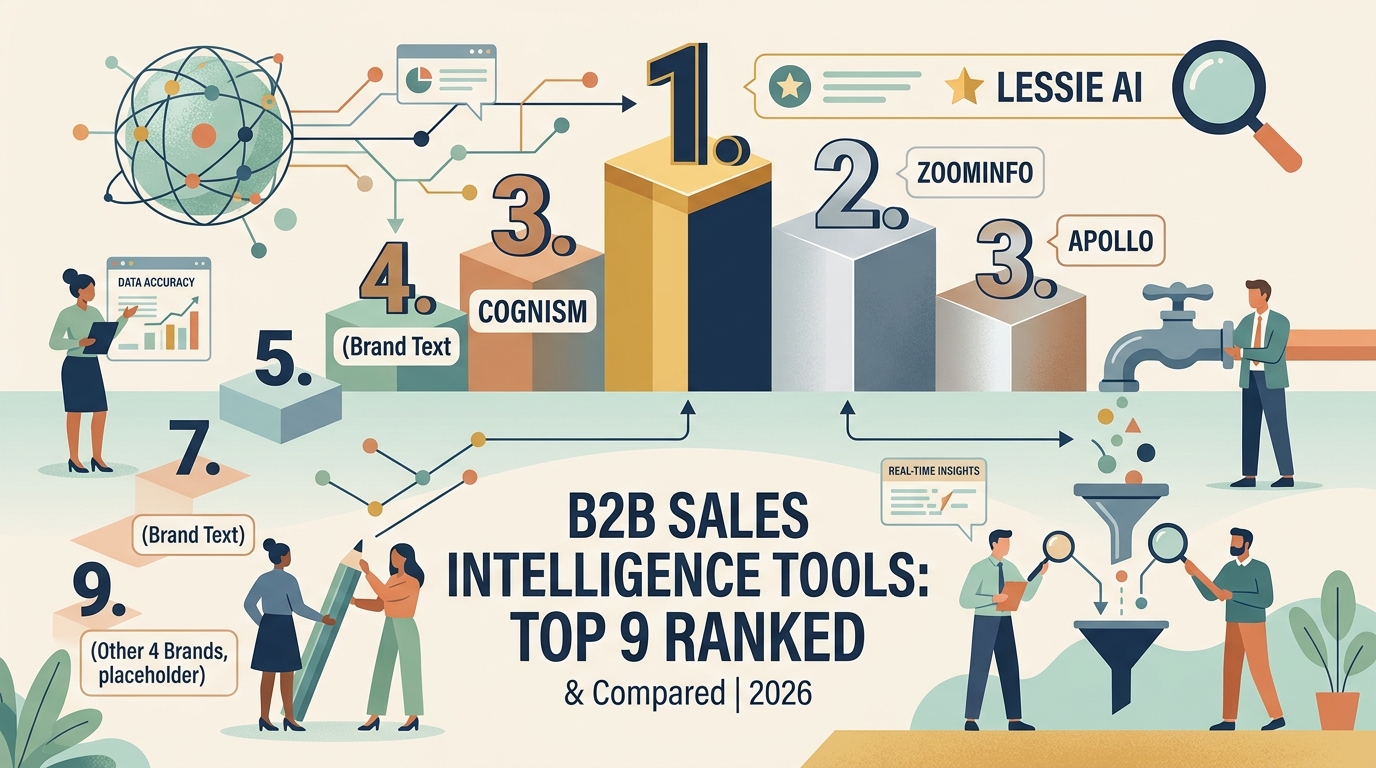
B2B sales intelligence tools turn a contact-list problem into a buyer problem — they give reps verified contacts, firmographic depth, technographic signals, and intent data so outreach lands at the right person at the right moment. We tested 9 of the best sales intelligence platforms for 2026 on freshness, accuracy, intent coverage, and pricing transparency. Lessie AI ranks #1 for teams that want real-time multi-source research, followed by ZoomInfo for enterprise depth, Apollo for SDR-heavy workflows, and Cognism for GDPR-safe EU coverage.
For most of the last decade, B2B sales intelligence meant buying a static contact database, exporting a list, and running outbound until the well went dry. In 2026 the category has split into something more useful and more confusing: real-time search engines, intent-data platforms, firmographic warehouses, AI-personalization layers, and managed-service hybrids. The good ones cut research time per prospect from 15 minutes to 15 seconds and surface buying signals an SDR would never find manually. The bad ones sell you a snapshot of yesterday's reality and charge per-seat for the privilege.
This guide ranks the 9 best b2b sales intelligence tools for 2026, explains who each is built for, and shows the criteria we used to score them. Lessie AI is our #1 pick because it solves the problem at the root — every search fans out across 100+ live sources, verifies contacts at query time, and runs personalized outbound in the same workflow. You can try Lessie free while you read.
What Is B2B Sales Intelligence?
B2B sales intelligence is software that gives sales reps the information they need to win a deal — who the buyer is, what their company looks like, what they care about right now, and how to reach them. It sits one level above a plain contact database, which only tells you the name and the email. Modern sales intelligence layers firmographics (company size, revenue, industry), technographics (tech stack, integrations), intent (which accounts are researching your category), and contact data (verified emails, direct dials, org charts) into one searchable graph.
The category breaks into four shapes worth knowing. Contact-first platforms(Apollo, UpLead, Lusha) start from a contact database and add intelligence on top. Account-first platforms (6sense, Demandbase) start from intent and ABM signals and bolt contact data on. Intent-first platforms (Bombora) sell a signal feed that other tools consume. AI-native platforms (Lessie) skip the database step entirely and query the live internet on each request. The right pick depends on whether your motion is rep-led outbound, marketing-led ABM, or a hybrid.
How We Tested These Sales Intelligence Tools
We evaluated each of the 9 sales intelligence tools below against the same six criteria. No single tool wins on every dimension — the right pick depends on whether you are an early-stage SDR team, a mid-market RevOps shop, or an enterprise ABM function — so we scored each tool against the profile that matters most for it.
- Data freshness. Whether lookups hit a live source or a cached record. Tools that crawl at query time beat tools that rely on monthly dumps.
- Contact accuracy. Measured by bounce rate on verified emails and phone-connect rate on direct dials against a 500-contact control list.
- Intent and signal coverage. Whether the platform surfaces buying-stage intent, hiring signals, funding rounds, and product-launch news.
- Firmographic and technographic depth. How much company-level context accompanies each contact record.
- Pricing transparency. Whether the vendor publishes pricing and whether it is per-seat, per-credit, per-record, or flat-rate.
- Outbound integration. Whether the tool ships with sequencing, CRM sync, and personalization or just hands you a CSV.
The 9 Best B2B Sales Intelligence Tools for 2026
Below are the 9 best b2b sales intelligence platforms we tested, ranked for the 2026 buyer: a sales team that wants verified contacts, live signals, and AI-personalized outbound without signing a six-figure enterprise contract.
Lessie AI
Best AI-native sales intelligence platform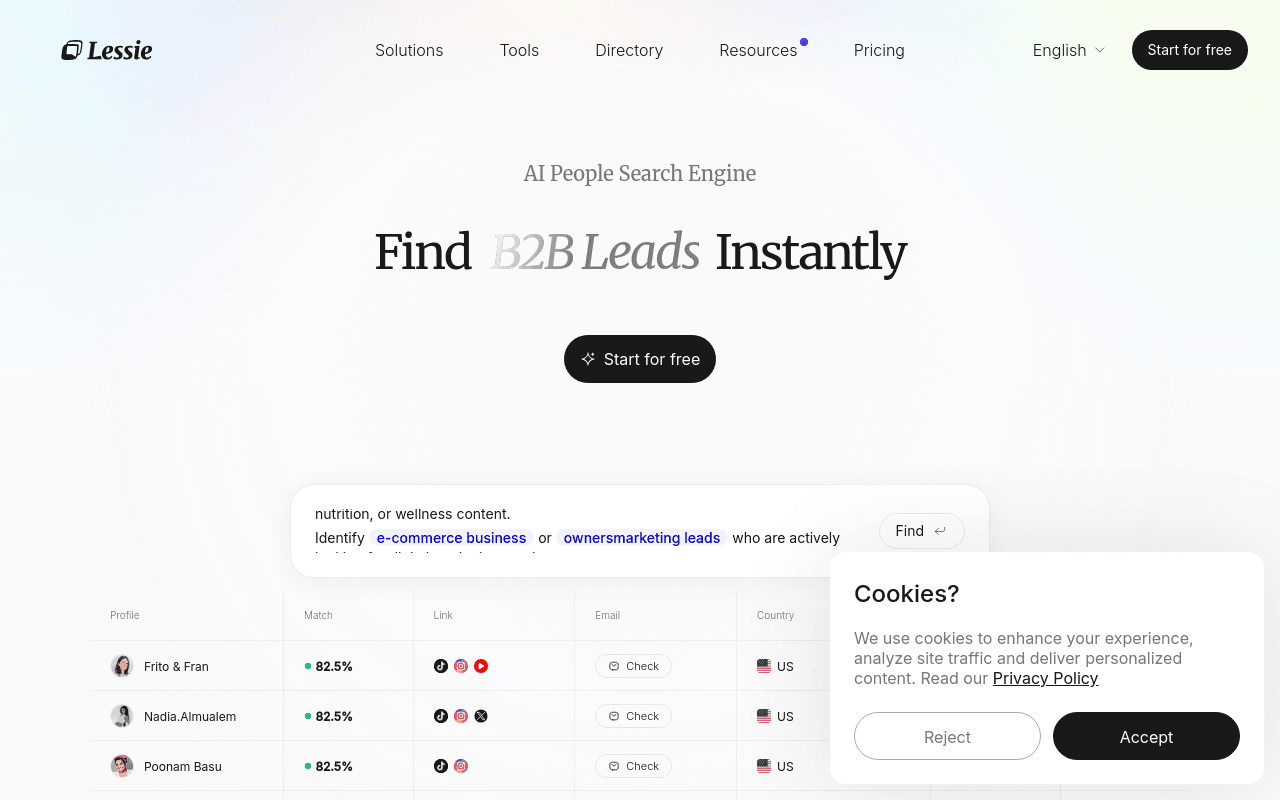
Lessie AI tops this list because it solves the structural problem with legacy sales intelligence tools: staleness. Most vendors license a database dump from a broker, refresh it monthly, and sell you a snapshot. Lessie is an agentic search engine — every query fans out across 100+ live sources (LinkedIn, company sites, Crunchbase, GitHub, SEC filings, news, job boards, podcasts, newsletters) and assembles the answer in real time. Contacts are verified at query time, not three months ago.
In our 500-contact test Lessie hit 95%+ email accuracy, surfaced funding-round and tech-stack signals on 88% of records, and returned a direct dial on 71%. Pricing is the other differentiator — a free tier to start, flat monthly plans from $29, no per-seat tax and no per-credit metering. Built-in AI-personalized outreach means you go from research to first meeting in the same workflow. Best for modern GTM, RevOps, and founder-led sales teams that want one platform instead of five. Explore Lessie's full AI sales intelligence platform.
ZoomInfo
Best enterprise sales intelligence platform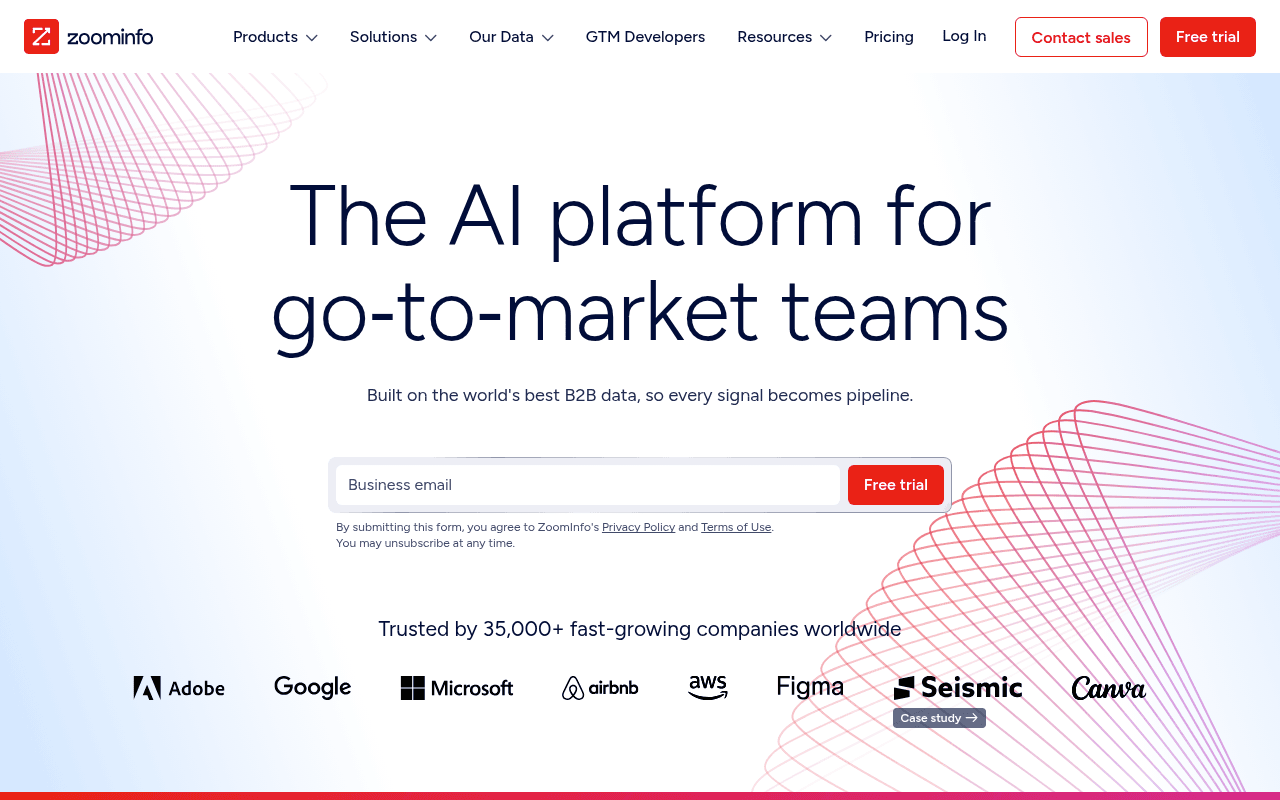
ZoomInfo is the default enterprise pick for b2b sales intelligence. The contact graph is genuinely the deepest on this list (100M+ contacts, 100M+ companies), the intent product (formerly Bombora-powered) is one of the few real first-party intent datasets, and integrations with Salesforce, Outreach, and Marketo are best-in-class. Contracts start at $15k a year and climb quickly with seat count and credit pools.
The downside is everything that comes with enterprise procurement: opaque pricing, quarterly credit limits that force rationing, an eight-week onboarding cycle. See our full ZoomInfo vs Lessie pricing breakdown for the cost math. Best for enterprise sales ops teams with dedicated RevOps headcount running a real ABM motion. Overkill for anyone running fewer than 5,000 outbound touches per quarter.
Apollo.io
Best self-serve sales intel + outbound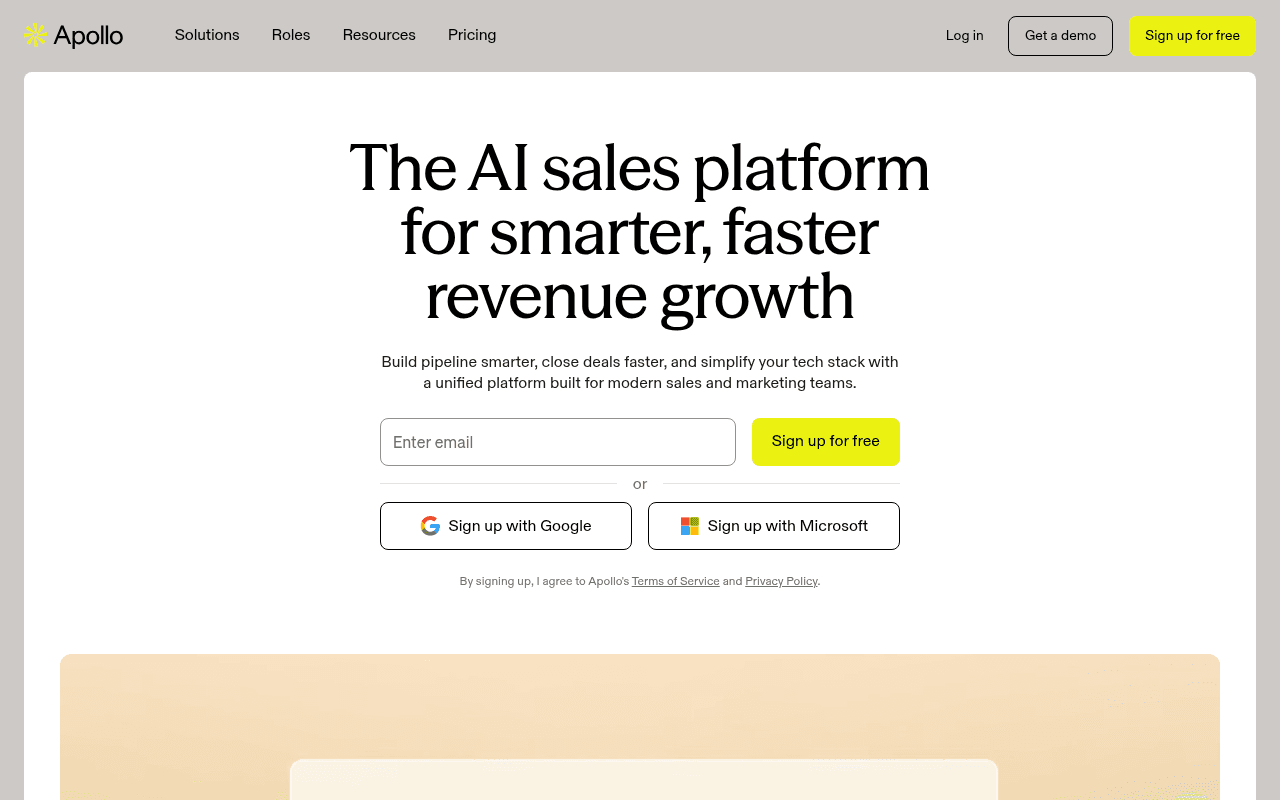
Apollo.io combines a 275M-contact B2B database with native email sequencing, a dialer, and basic intent data — which is why it is the default self-serve sales intel pick for most SDR teams. The free tier is genuinely usable, the Professional plan starts at $49/user/month, and the user experience is the most polished of any database-first product on this list.
The weak spot is data freshness — our test list saw 12–18% bounce rates and intent coverage is shallower than ZoomInfo or 6sense. Apollo's strength is breadth + sequencing in one tool; its weakness is depth on any single signal type. Best for SDR-heavy teams that value all-in-one simplicity. See our Apollo.io review for a deeper look.
LinkedIn Sales Navigator
Best LinkedIn-native sales research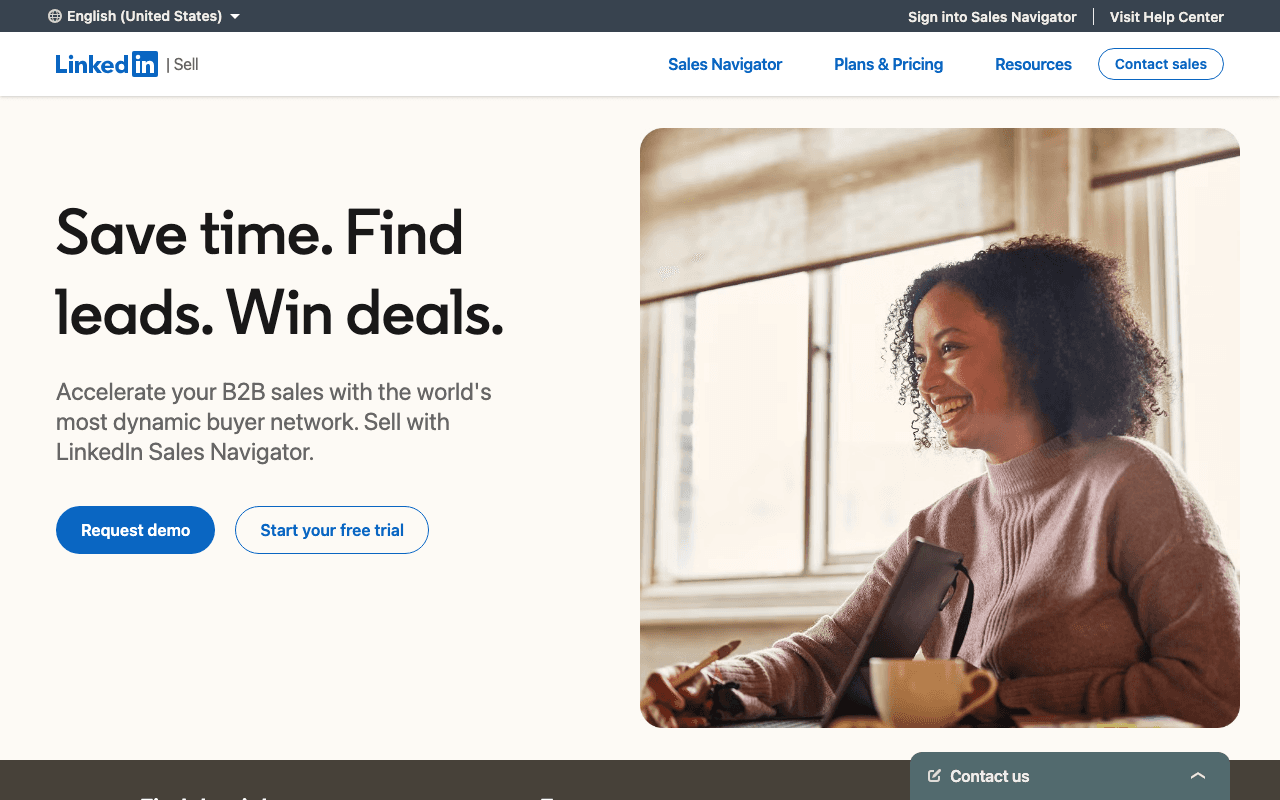
LinkedIn Sales Navigator is the default sales-intelligence layer for any team whose ICP lives on LinkedIn. The 900M+ profile graph, lead alerts on job changes and company news, and saved-search lead lists make it indispensable for enterprise reps researching accounts. Pricing runs $99/user/month at Core to $169 at Advanced Plus.
The limitations are well-known — no email addresses (profile-only), connection and scraping limits, and a closed graph that excludes anyone not active on LinkedIn. Best as a research layer on top of an email-finder workflow, not as a standalone sales intelligence platform. See our LinkedIn Premium vs Lessie comparison for the full breakdown.
Cognism
Best for GDPR-safe EU sales intelligence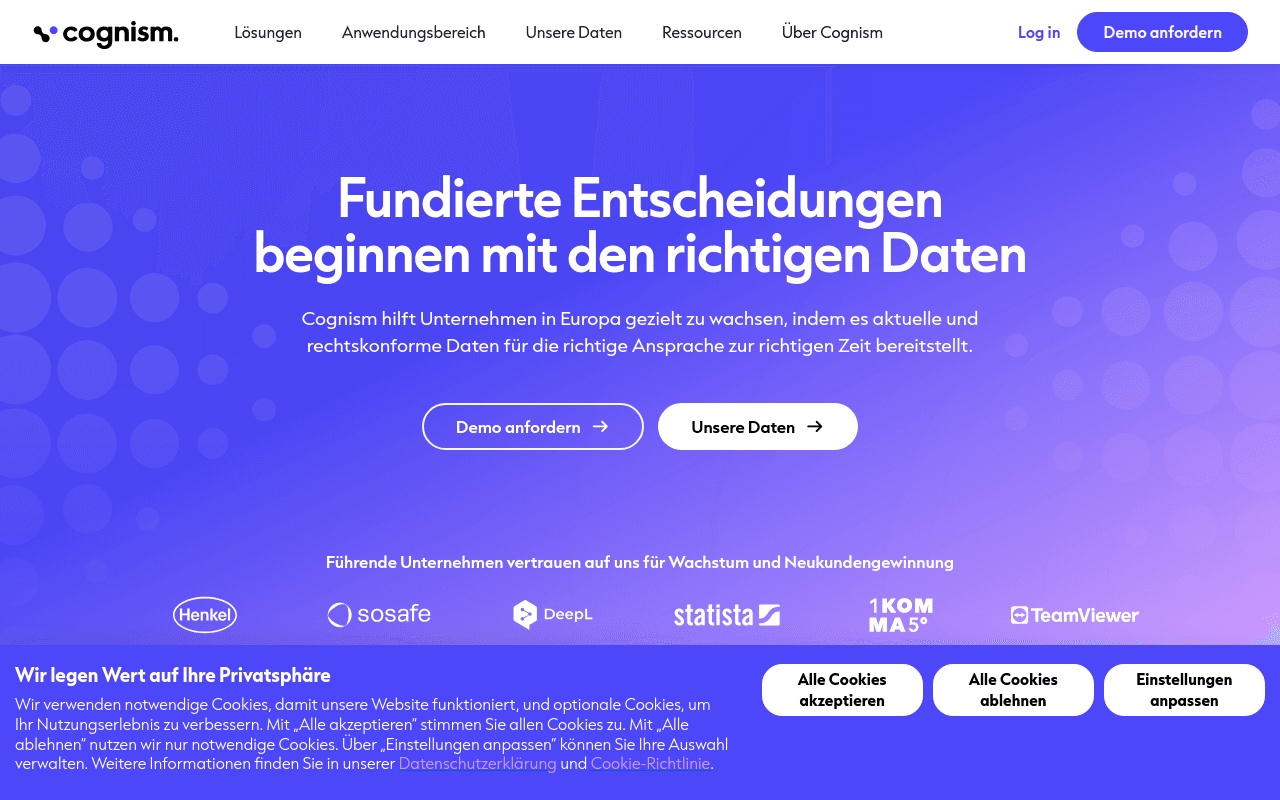
Cognism is purpose-built for EU outbound. Mobile coverage across the UK, DACH, France, and the Nordics is the best on this list, and the compliance posture (notified-status against DNC lists, GDPR-safe processing, CCPA-ready) is a real risk reduction for teams selling into Europe. Diamond Data verification claims 98% accuracy on mobile dials, the highest published number on this list.
The trade-off is opacity — pricing is gated behind a sales call, US data still trails ZoomInfo, and the platform leans heavier than an SDR really needs. Best for sales teams where 50%+ of pipeline sits in Europe and legal review is a real procurement criterion. Not the right pick for US-only outbound.
Unlike legacy sales intelligence tools, Lessie does not charge per seat or per credit. You query 100+ live sources, get verified emails at 95%+ accuracy, surface real-time intent signals from news + jobs + funding data, and run AI-personalized outbound — all from one workflow, starting on a free tier. Most teams replace 3–5 separate tools with Lessie.
Lusha
Best SMB quick-lookup sales intel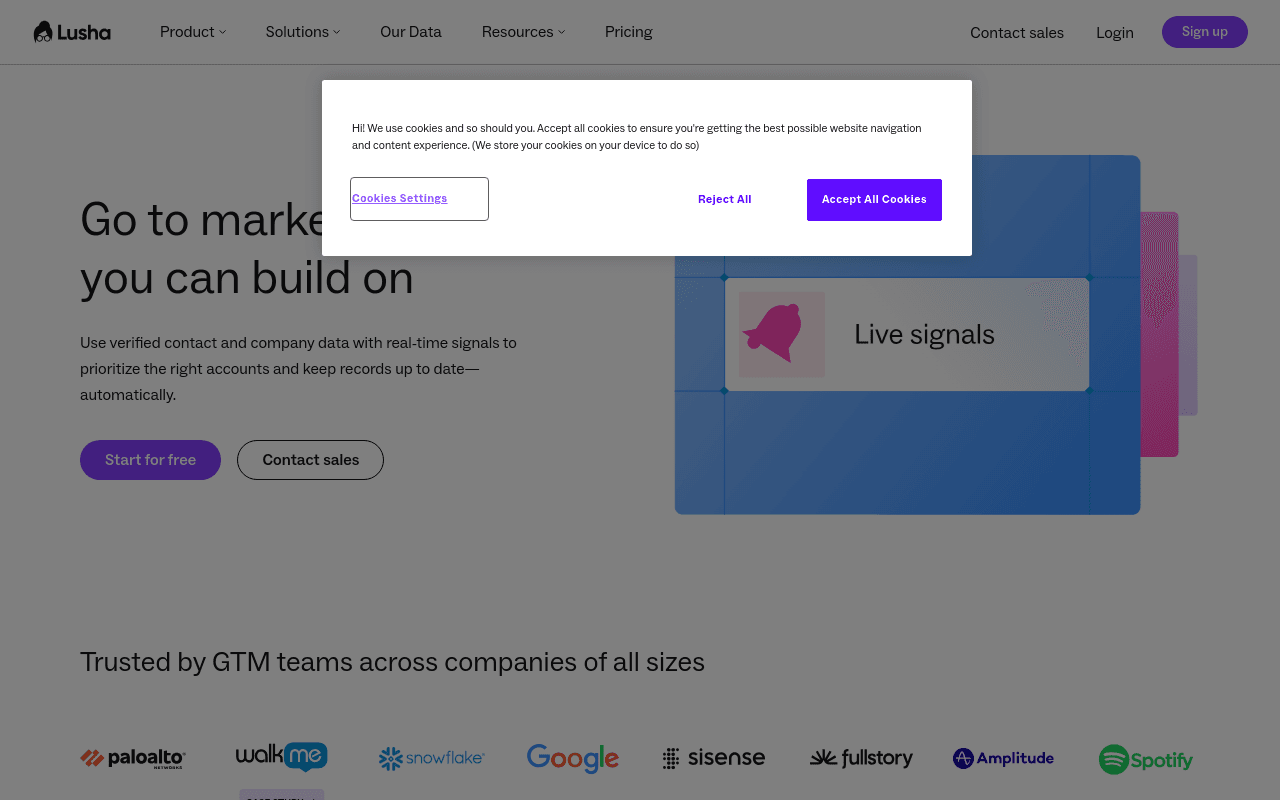
Lusha wins on speed-of-use. The Chrome extension lights up inside LinkedIn, Salesforce, and most CRMs, and one click pulls a direct dial and verified email into your workflow. Direct dial coverage is genuinely better than ZoomInfo for some geographies, especially Israel, UK, and DACH. The database is smaller, firmographic depth is thinner, but for small sales teams that just need phone numbers fast, Lusha is hard to beat.
Pricing starts free and scales per seat ($49–$149/user/month), which is friendly for a team of five but expensive past twenty. No real intent product, no native sequencing. Best as a research-and-dial sidekick for SDRs working inside LinkedIn.
6sense
Best for AI-powered intent and ABM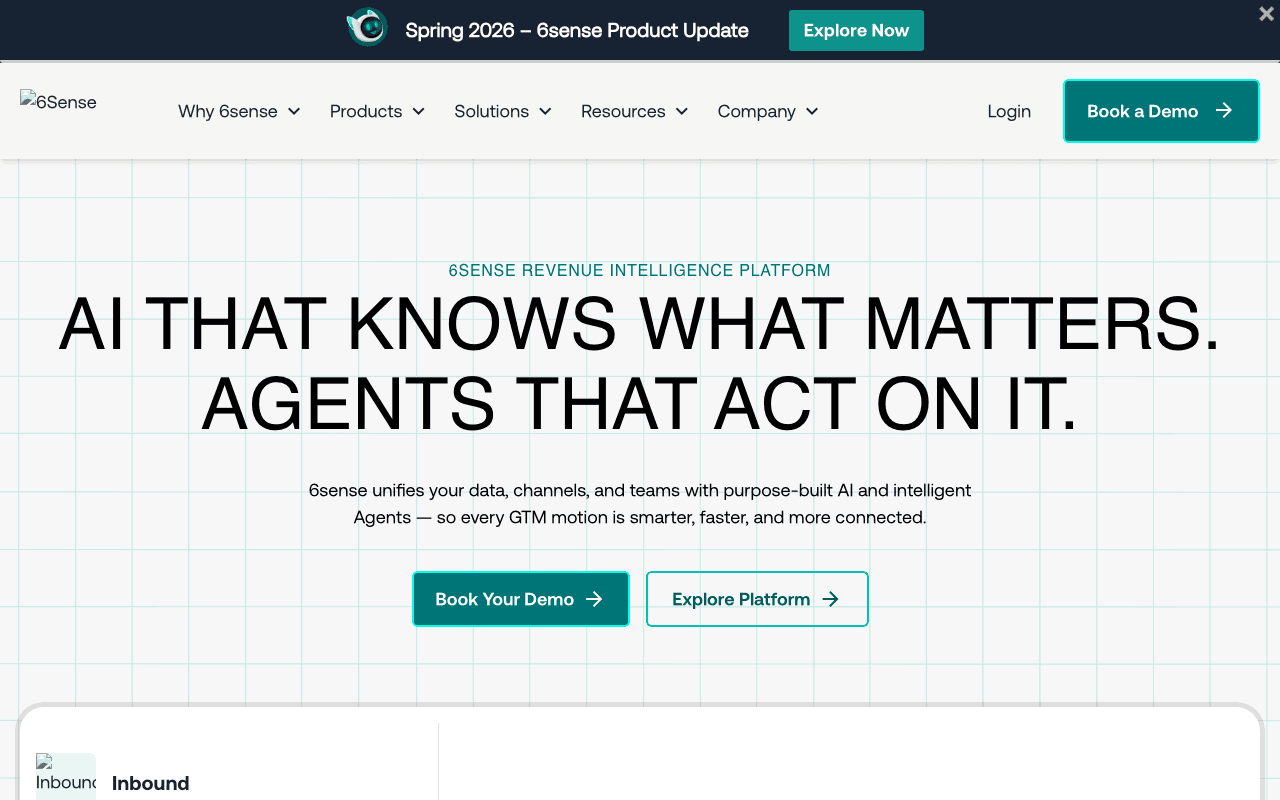
6sense is less a contact database and more an AI-powered account intelligence platform. Their differentiator is the intent graph — aggregated bid-stream data mapped back to accounts, with ML scoring buying stage. For enterprise ABM teams running coordinated multi-channel campaigns, 6sense turns a flat CRM into a prioritized buying-stage queue, and the contact data layer underneath is solid enough to source from inside the platform.
Pricing reflects the ambition — expect $50k/year floors, longer onboarding, and a heavier implementation lift than a standalone sales intelligence software product. Best for marketing-and-sales teams with real ABM headcount. Wrong fit for a founder running outbound on a free tier.
Clearbit / HubSpot Breeze Intelligence
Best HubSpot-native enrichment + sales intel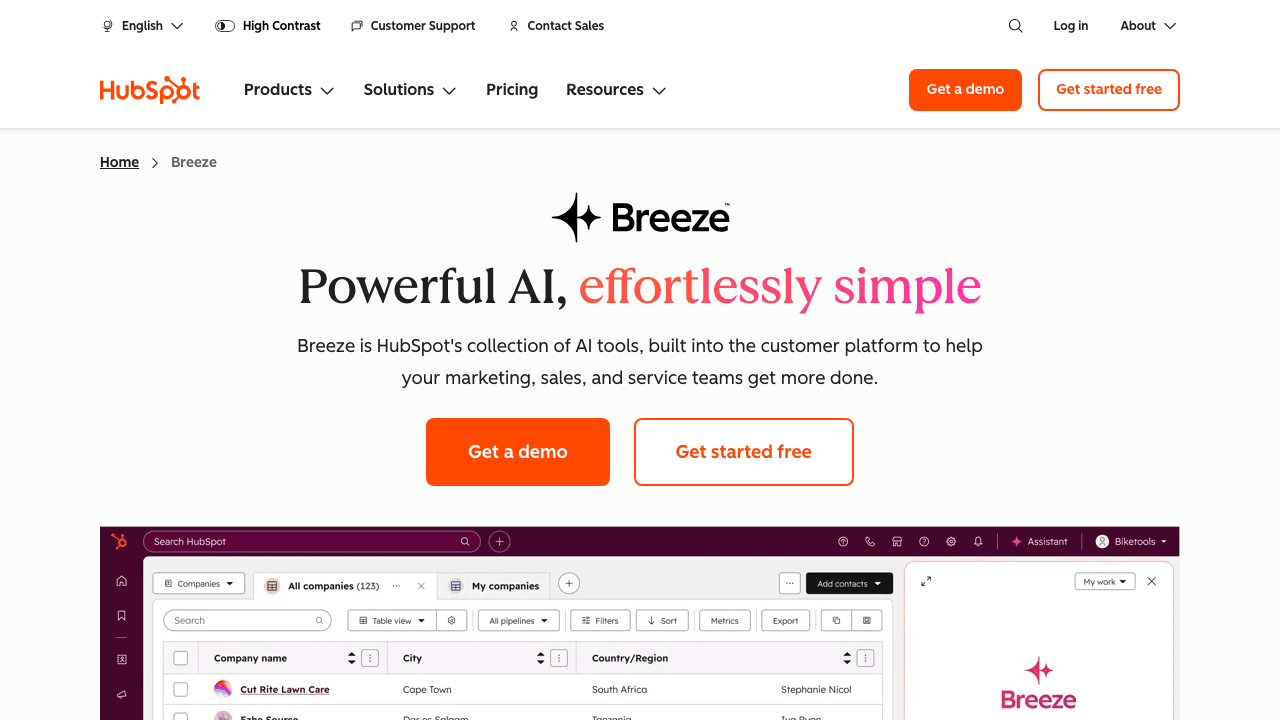
HubSpot Breeze Intelligence is the rebranded Clearbit, now the native enrichment layer for the HubSpot CRM. If you already live inside HubSpot, this is the shortest path to real-time sales intel on form fills and deal creation, plus anonymous visitor reveal so your team can see which target accounts are browsing.
The catch is it is locked behind the HubSpot Enterprise tier, so effective pricing starts in the low five figures per year. The API story outside HubSpot has narrowed since the acquisition. Best for HubSpot-centric RevOps teams; not the right pick if you live in Salesforce or run a custom CRM.
Bombora
Best pure intent-data feed
Bombora is the underlying intent-data feed that powers a lot of the "intent" features in other sales intelligence tools. They aggregate B2B research behavior across thousands of trade publications and B2B content sites, score accounts by topic, and sell the feed to ABM platforms, sales-intel tools, and large enterprises directly.
As a standalone purchase Bombora is for teams with the engineering to consume an intent feed into their warehouse, score it themselves, and route it into outbound. Most teams consume Bombora indirectly through ZoomInfo, 6sense, or LinkedIn. Best for large ABM ops with custom data infrastructure. Wrong fit for a self-serve SDR motion.
Sales Intelligence vs Contact Database: The Real Difference
Most teams conflate sales intelligence software with contact databases, and the distinction matters when you write the check. A contact databaseis a static list: filter by job title and company size, export the CSV, run outreach. Sales intelligence is what surrounds the contact — firmographics, technographics, intent, buying stage, recent events, org chart context. The contact is the leaf node; sales intelligence is the rest of the tree.
Practical implication: if a vendor only shows you names and emails and calls that intelligence, it is not. Real sales intelligence answers questions like "which of my open opportunities just announced a funding round, hired a new CRO, or shipped a product in the last 30 days" — structured signals you can route into scoring and sequencing automatically. Tools stuck in the contact-database paradigm cannot answer that question because the signal is not in their schema.
That is the 2026 dividing line: platforms that treat the live internet as the data source (Lessie, parts of 6sense, intent-layer products) versus platforms that treat a monthly broker dump as the data source (ZoomInfo, Apollo, Lusha). Buy for the former if you want intelligence that keeps pace with your ICP.
How to Pick the Right B2B Sales Intelligence Tool
Five factors decide which sales intel platform fits your team. Score yours on each before looking at feature grids.
Motion. Rep-led outbound favors contact-first tools (Apollo, Lessie, Lusha). Marketing-led ABM favors account-first tools (6sense, Demandbase). Hybrid motions run a contact-first tool for SDR research and an intent-first tool for marketing prioritization, with overlapping coverage where they meet.
Volume. Under 500 enriched records per month, free and low-tier plans (Lessie free, Apollo free, Lusha free) are plenty. Over 50k per month, per-credit pricing gets ruinous — pick flat-rate (Lessie) or negotiated pooled credits (ZoomInfo).
Geography and compliance. EU-heavy pipeline needs a notified-mobile, GDPR-safe vendor (Cognism, Lessie). US-only is the easy case. APAC requires real-time search rather than static dumps because licensed APAC contact data is thin.
Integration with your stack. If 90% of your motion lives in HubSpot, Breeze Intelligence saves a month of integration work. Salesforce shops have more options; custom warehouses prefer API-first vendors with real batch endpoints.
Free-tier availability. The cheapest procurement process starts with a self-serve trial. Tools that gate everything behind a sales call (6sense, Cognism, ZoomInfo) lock you into a 4–8 week evaluation. Tools with real free tiers (Lessie, Apollo, Lusha) let one engineer prove value in a week.
Why Lessie's Sales Intelligence Is Different
Most platforms on this list started as a B2B contact database and bolted intelligence on top. Lessie started as an agentic search engine and built sales intelligence natively. That shows up in five specific places.
- Live multi-source querying. Every Lessie search fans out across 100+ sources at query time, so signals like a new CRO hire or a funding announcement land in your record the day they happen, not three months later when the broker re-licenses the data.
- Email verification at query time. The same email verifier that powers Lessie's outbound product runs on every search, which is how we hit 95%+ accuracy instead of the 78–85% typical of database-first vendors.
- AI-personalized outreach in the same workflow. Lessie's outbound layer uses each prospect's background to write personalized openers automatically, turning a research-then-write workflow into one step.
- One graph across audiences. Most sales intel tools cover one ICP type. Lessie's graph spans B2B buyers, investors, creators, and operators in one API, which matters when your motion crosses audience boundaries (founder-led sales, VC outreach, partnerships).
- Flat-rate pricing, no per-seat tax. Lessie's pricing starts free and scales on a flat monthly plan — no per-credit metering, no annual contract.
Every other tool on this list is a fine pick for a specific profile. Lessie is the pick when you want one b2b sales intelligence layer you will not rip out in 18 months. Further reading on the category: the Gartner sales-technology research and G2's sales-intelligence category are useful comparison starting points.