




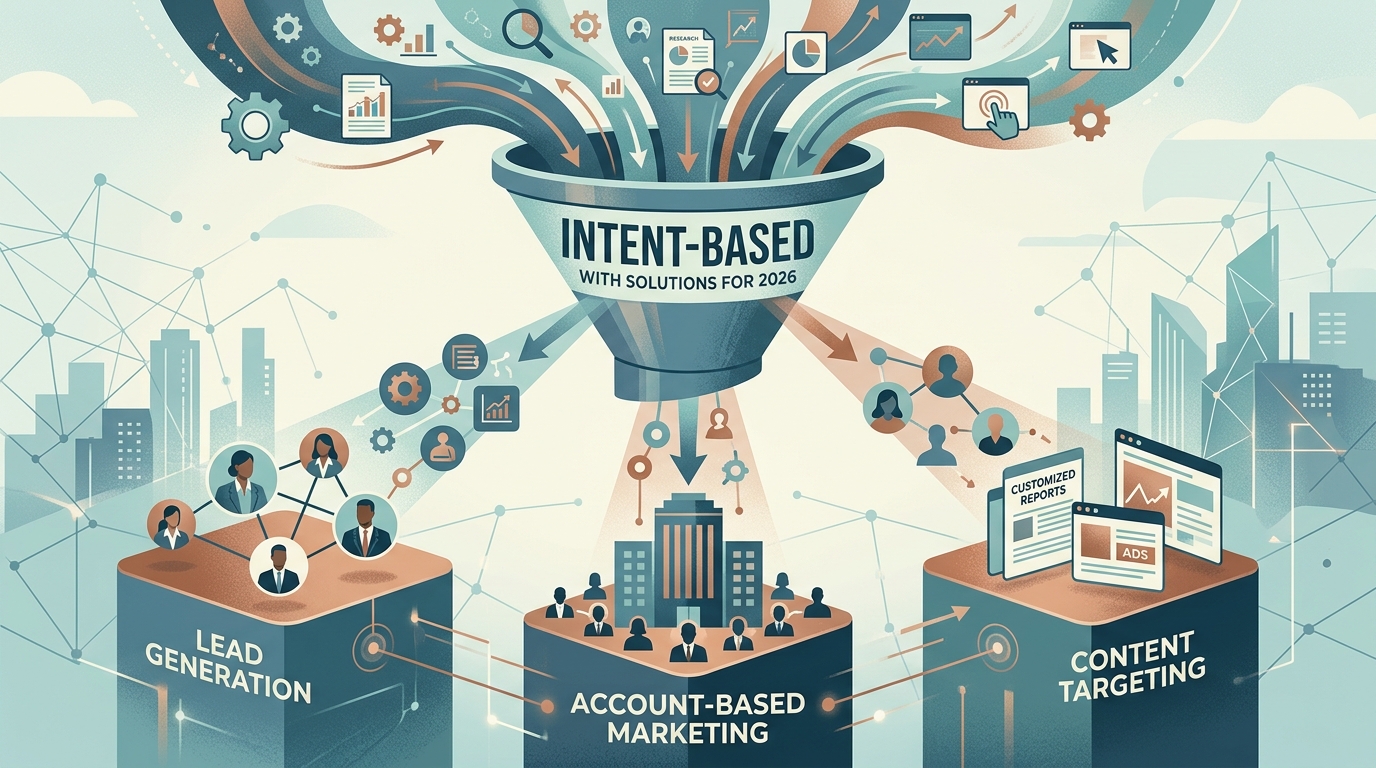
En resumen: El marketing basado en intención se dirige a los compradores en función de señales de comportamiento —contenido consumido, búsquedas realizadas, herramientas investigadas— en lugar de datos demográficos estáticos. Los equipos que integran los datos de intención en su alcance reportan tasas de respuesta 2–3 veces más altas y ciclos de ventas 30–50% más cortos en comparación con la segmentación solo por ICP. Esta guía explica las tres fuentes de datos de intención, un marco de 5 pasos para operativizarlas, el panorama de herramientas en 2026 y cómo empezar sin un presupuesto de seis cifras. Combínalo con nuestro análisis profundo de señales de intención para una taxonomía señal por señal.
La mayoría de los equipos B2B todavía eligen prospectos como lo hacían en 2018: construyen un ICP, extraen una lista que coincide con los datos firmográficos y envían la misma secuencia a todos. El problema es que en cualquier día, solo el 3–5% de las cuentas en tu ICP están realmente evaluando una solución como la tuya. El otro 95% recibe tu correo electrónico cuando no tiene ningún contexto para ello —por eso las tasas de respuesta promedio de correos fríos B2B han caído por debajo del 2%.
El marketing basado en intención cambia esto. En lugar de preguntar"¿quién encaja en nuestro ICP?", preguntas "¿quién en nuestro ICP está mostrando un comportamiento de compra ahora mismo?" Luego, diriges esas cuentas al alcance, anuncios o ventas primero — mientras todos los demás esperan en un proceso de nutrición de ciclo más largo. Esta guía es el manual completo: definiciones, las tres fuentes de datos, el marco de implementación y el panorama de herramientas en 2026.
¿Qué es el Marketing Basado en Intención? (Definición + Idea Central)
El marketing basado en intención es una estrategia de salida al mercado B2B que utiliza señales de comportamiento — no solo datos firmográficos— para identificar qué cuentas y personas están investigando activamente una decisión de compra, y luego prioriza el alcance, los anuncios y el esfuerzo de ventas contra ese subconjunto. La unidad de trabajo es la señal, no el dato demográfico.
El marketing B2B tradicional funciona bajo la suposición de que cualquiera que coincida con tu perfil de ICP tiene un valor aproximadamente igual. Segmentas por industria, tamaño de empresa, puesto de trabajo y ubicación, luego empujas a todos a través del mismo embudo. La capa de señales es invisible, por lo que el momento es aleatorio.
El marketing basado en intención asume lo contrario: dos cuentas con datos firmográficos idénticos se comportan de manera muy diferente según el punto en el que se encuentren en un ciclo de compra. La cuenta que busca "Lessie vs Apollo" un martes por la tarde vale 50 veces más que la cuenta que no ha escrito el nombre de tu categoría en seis meses. El trabajo es detectar esa señal, calificarla y actuar sobre ella antes que los competidores.
¿Qué cuenta como una señal de intención? Cualquier cosa observable que se correlacione con una compra activa: consultas de búsqueda en sitios de terceros, descargas de contenido, visitas repetidas a tu página de precios, ofertas de trabajo que mencionan la herramienta que reemplazas, movimientos ejecutivos en tu ICP, eventos de financiación, cambios en la pila tecnológica. Cuanto más rica sea tu capa de señales, antes capturarás la ventana de compra.
Por qué ahora. Tres cosas convergieron. Primero, los proveedores de datos de terceros (Bombora, G2, TrustRadius, ZoomInfo) hicieron que la intención de tema agregada estuviera disponible comercialmente. Segundo, la IA hizo que la personalización de señal a alcance fuera barata —puedes escribir una apertura personalizada que haga referencia al desencadenante exacto en segundos. Tercero, la entregabilidad se endureció: las reglas de remitentes de Gmail y Yahoo de 2024 redujeron los límites de rebote, lo que penaliza el envío masivo y recompensa el volumen de envío pequeño y basado en señales. El marketing basado en intención es la respuesta natural a los tres.
Por Qué el Marketing Basado en Intención Supera al Marketing B2B Tradicional
Los equipos que utilizan el marketing basado en intención reportan consistentemente tasas de respuesta 2–3 veces más altas, ciclos de ventas 30–50% más cortos y relaciones pipeline-ingresos significativamente mejores que los equipos basados solo en datos firmográficos. La razón es mecánica, no mágica: dejas de desperdiciar el alcance en cuentas que no están en el mercado.
Aumento de la tasa de respuesta. El correo electrónico frío a una lista genérica de ICP ahora tiene una tasa de respuesta del 1–3% en la mayoría de las categorías B2B. El mismo correo electrónico enviado a cuentas que muestran intención de aumento —digamos, un pico en la actividad de investigación en torno a tu categoría en los últimos 14 días— típicamente se sitúa entre el 6% y el 12%. La investigación de marketing B2B de Forrester sobre la selección de cuentas basada en intención muestra consistentemente tasas de engagement que son múltiplos de las de outbound no segmentado. El aumento proviene del momento, no de la copia: el prospecto iba a evaluar este trimestre de todos modos, y tu mensaje llegó dentro de la ventana de evaluación.
Compresión del ciclo. Cuando llegas a una cuenta que ya está en plena investigación, te saltas la fase de "qué es esta categoría" por completo. La investigación de Gartner sobre el viaje de compra B2B ha informado que los compradores completan aproximadamente el 70% de su evaluación de forma independiente antes de hablar con los proveedores; los datos de intención te permiten entrar en la conversación en la segunda mitad de ese viaje, donde los ciclos se comprimen y se deciden los acuerdos competitivos. Los equipos que ejecutan programas maduros de marketing basado en intención reportan ciclos B2B típicos que se reducen de 90 días a 45–60 días para cuentas marcadas por intención.
Eficiencia del gasto. Las listas estáticas de ICP tratan todas las cuentas como de igual costo. En la práctica, el 60% inferior de un ICP rara vez compra este trimestre. La priorización basada en intención mueve el gasto en anuncios, las horas de SDR y el alcance de prueba gratuita al 5–10% superior de las cuentas en el mercado —típicamente triplicando la eficiencia de costo por reunión sin aumentar el presupuesto total.
Mejora la alineación ventas-marketing. Ambos equipos de repente están de acuerdo en lo que significa un "buen lead" —es una cuenta que muestra un comportamiento de compra observable, no una solicitud de un descargable gratuito. La lucha por los MQLs se calma. Los SDRs trabajan con cuentas más cálidas y dejan de quejarse de la calidad de la lista.
Una vez que las señales de intención marcan una cuenta, aún necesitas un contacto verificado para actuar sobre ellas. Lessie convierte una empresa más un rol objetivo en un correo electrónico entregable, para que el SDR tenga algo que enviar el día en que se activa la señal.
Tipos de Señales de Intención (Propias, de Terceros y de Socios)
Los datos de intención vienen en tres sabores, y la diferencia entre ellos determina la cobertura, la precisión y lo que puedes hacer legalmente con los datos. La mayoría de los programas maduros combinan los tres; cada uno tiene un papel distinto en el embudo.
La intención propia es la señal que observas en tus propias propiedades: visitas al sitio web, tiempo en la página de precios, solicitudes de demostración, descargas de libros electrónicos, consultas de búsqueda de soporte, patrones de uso de la aplicación. Es el tipo más preciso —el prospecto está literalmente interactuando contigo— pero solo cubre a las personas que ya conocen tu marca. Utiliza la intención propia para clasificar los leads entrantes y activar jugadas de expansión a nivel de cuenta.
La intención de socios es la señal que recibes de un socio que comparte sus datos propios contigo bajo contrato: un sitio de reseñas (G2, TrustRadius, Capterra) compartiendo visitantes de páginas de comparación, un socio de medios compartiendo clics en boletines, o una herramienta complementaria compartiendo registros de prueba. La cobertura es estrecha pero la calidad es alta porque el contexto de intención es específico y reciente.
La intención de terceros es una señal agregada a través de una red de editores, cooperativas o sensores que detectan el engagement con temas a nivel de cuenta — el modelo de cooperativa de Bombora es el ejemplo canónico, junto con ZoomInfo Intent, 6sense, Demandbase y TechTarget Priority Engine. La cobertura es la más amplia porque ves señales incluso de cuentas que nunca te visitaron; la precisión es menor porque la atribución es probabilística a nivel de cuenta, no a nivel de persona.
Comparación rápida.
| Tipo | Fuente | Precisión | Cobertura | Mejor para |
|---|---|---|---|---|
| Propia | Tu propio sitio, app, CRM | Muy alta | Solo conscientes de la marca | Puntuación de leads, expansión |
| De socios | Socio comparte datos propios | Alta | Estrecha, contextual | Acuerdos competitivos, etapa de revisión |
| De terceros | Cooperativa, red de editores | Probabilística (a nivel de cuenta) | Amplia, a nivel de mercado | Detección de aumento, siembra ABM |
Para una taxonomía señal por señal —cambios de trabajo, eventos de financiación, picos de contratación, movimientos de pila tecnológica, aumentos de contenido, actividad de reseñas— consulta nuestra lectura más profunda sobre señales de intención en 2026.
El Marco de Marketing Basado en Intención de 5 Pasos
Un programa de marketing basado en intención que crece, no un piloto único. Cinco pasos, secuenciados para que cada uno alimente al siguiente. Si omites los pasos 1–2, gastarás el presupuesto en las señales incorrectas; si omites el paso 5, nunca sabrás qué señales valieron la pena.
Paso 1: Identifica tu ICP y los desencadenantes de compra. Antes de licenciar una sola fuente de intención, define exactamente qué cuentas te interesan (firmográficos + tecnográficos) y qué desencadenantes específicos indican que están evaluando. Para la mayoría de las empresas B2B SaaS, el conjunto de desencadenantes se parece a: contratar para un rol que tu producto habilita, publicar una oferta de trabajo mencionando a un competidor, completar una ronda de financiación, rotación ejecutiva en el buyer persona, o un aumento de investigación sobre temas de categoría. Escribe esto. Se convertirán en el filtro para cada fuente posterior.
Paso 2: Obtén datos de intención. Asocia cada desencadenante con la fuente más barata que lo detecte de manera confiable. Ofertas de trabajo y picos de contratación: gratis o de bajo costo a través de LinkedIn / scraping. Financiación y movimientos ejecutivos: Crunchbase + APIs de noticias. Aumento de temas: proveedor de intención de terceros (Bombora, G2, ZoomInfo Intent). Etapa de revisión: G2 o programa de intención de compra de TrustRadius. Señales propias: tus propios análisis. Resiste la tentación de comprar al proveedor más grande antes de saber qué desencadenantes realmente predicen acuerdos.
Paso 3: Califica y prioriza cuentas. Combina las señales en una única puntuación de cuenta: ajuste de ICP (peso ~40%) + fuerza de intención (peso ~40%) + actualidad (peso ~20%). Clasifica el resultado: Nivel A (múltiples señales frescas + ICP fuerte) va a SDR en 24 horas; Nivel B (una señal + ICP fuerte) va a la audiencia de anuncios ABM; Nivel C (señal pero ajuste débil) va a un proceso de nutrición de ciclo más largo. La mayoría de los equipos sobrevaloran el aumento de temas de terceros —que es ruidoso— y subestiman las señales propias como las visitas repetidas a la página de precios.
Paso 4: Personaliza el alcance por señal. Cada cuenta de Nivel A recibe una apertura que nombra el desencadenante. Una señal de financiación se abre con una nota de felicitación vinculada al ángulo de implementación. Una señal de contratación se abre con una referencia al rol que publicaron. Un aumento de tema se abre con un recurso relevante. El alcance genérico deshace todo el trabajo de segmentación anterior —el objetivo del marketing basado en intención es que tengas algo específico que decir. La redacción con IA hace que el costo marginal por envío sea casi cero.
Paso 5: Mide el pipeline e itera. Rastrea la contribución del pipeline por señal, no solo la tasa de respuesta. ¿Qué desencadenantes produjeron oportunidades? ¿Cuáles produjeron cierres de ventas? La mayoría de los equipos descubren después de un trimestre que dos o tres desencadenantes generan el 60–80% de los ingresos y el resto es ruido —corta el ruido, duplica el presupuesto en los ganadores. Vuelve a calificar trimestralmente. El panorama de señales cambia a medida que tu ICP y producto evolucionan.
Para una capa de outbound lista para implementar que se asienta sobre este marco, consulta el flujo de trabajo de generación de leads B2B de Lessie.
Principales Plataformas y Herramientas de Datos de Intención en 2026
El panorama de proveedores se divide en dos grupos: proveedores de datos de intención puros que licencian una fuente de intención de tema, y plataformas ABM/de orquestación que consumen intención y la dirigen a anuncios, ventas y CRM. La mayoría de los programas maduros combinan uno de cada uno con una capa de datos de contacto separada para convertir las señales a nivel de cuenta en alcance a nivel de persona.
1. Bombora (intención de tema de terceros). La fuente de intención cooperativa canónica, que agrega señales de consumo de contenido a través de una red de editores. Vendida a la mayoría de las principales plataformas ABM (6sense, Demandbase, ZoomInfo). Ideal para la detección de aumentos a nivel de categoría en ICP grandes. Solo a nivel de cuenta, no a nivel de persona. El precio es empresarial.
2. 6sense (orquestación + intención). Plataforma basada en cuentas que combina intención de terceros (derivada de Bombora) con análisis predictivos y orquestación de engagement de cuentas. Ideal para equipos empresariales que ejecutan ABM coordinado con anuncios, ventas y CRM en una sola plataforma. Curva de aprendizaje y precio elevados.
3. Demandbase (plataforma ABM). Comparable a 6sense en alcance —ingesta de intención, puntuación de cuentas, segmentación de anuncios, activación de ventas. A menudo seleccionada para movimientos ABM intensivos en anuncios donde la segmentación basada en IP es importante.
4. ZoomInfo Intent. Integrado en la base de datos de contactos de ZoomInfo; Streaming Intent muestra aumentos de temas a nivel de cuenta. Más fuerte cuando se combina con los propios contactos listos para CRM de ZoomInfo. Conveniente si ya eres cliente de ZoomInfo.
5. G2 Buyer Intent. Señal de sitio de reseñas: quién está investigando tu categoría o tus competidores en G2 ahora mismo. Estrecha pero de altísima calidad —un comprador que compara Salesforce vs HubSpot en G2 está en el mercado, punto. Mejor como complemento a una intención más amplia, no como reemplazo.
6. TechTarget Priority Engine. Intención de red de editores centrada en categorías tecnológicas. Más fuerte en los segmentos de TI, seguridad e infraestructura donde la red editorial de TechTarget tiene un alcance profundo.
Capa de datos de contacto. Una vez que una plataforma de intención marca una cuenta, aún necesitas un correo electrónico verificado para la persona adecuada. Herramientas como ZoomInfo, Apollo y Lessie se sitúan después de la fuente de intención y convierten las señales a nivel de cuenta en alcance a nivel de persona. Esto es una compra separada de la intención misma.
Cómo elegir. Equipo empresarial con CRM y pila de anuncios existentes: elige una plataforma de orquestación (6sense o Demandbase) y canaliza la intención de Bombora a ella. Ya usas ZoomInfo: activa Intent y combínalo con G2 para la señal de etapa de revisión. Equipo más pequeño sin un presupuesto empresarial: comienza con desencadenantes de fuente gratuita (LinkedIn, Crunchbase, tus propios análisis) y una herramienta de descubrimiento de contactos, y solo licencia una fuente de intención de pago una vez que puedas demostrar qué desencadenantes realmente convierten. Evita comprar tres proveedores superpuestos —la mayoría de los programas dejan el 60% de la señal pagada sin usar.
Dónde Encajan los Datos de Contacto Verificados Junto con la Intención
Los datos de intención responden qué cuentas están en el mercado. No te entregan, por sí solos, un correo electrónico verificado para la persona adecuada en esa cuenta —ese es un problema separado, y es donde la mayoría de los programas de intención se estancan. Una señal de aumento de Bombora o un evento de financiación de Crunchbase solo es útil si puedes contactar al tomador de decisiones real antes que los competidores.
Aquí es donde las herramientas de descubrimiento de contactos como Lessie se sitúan junto (no en lugar de) la pila de intención: una vez que tu plataforma de intención marca una cuenta, aún necesitas un contacto verificado para el buyer persona adecuado. Lessie se enfoca en esa entrega —tomando una empresa más un rol y devolviendo un correo electrónico actual y entregable— para que el SDR tenga algo que enviar cuando se activa la señal. Consulta nuestro flujo de trabajo de generación de leads B2B para ver cómo la capa de descubrimiento de contactos se conecta a un movimiento impulsado por la intención.