




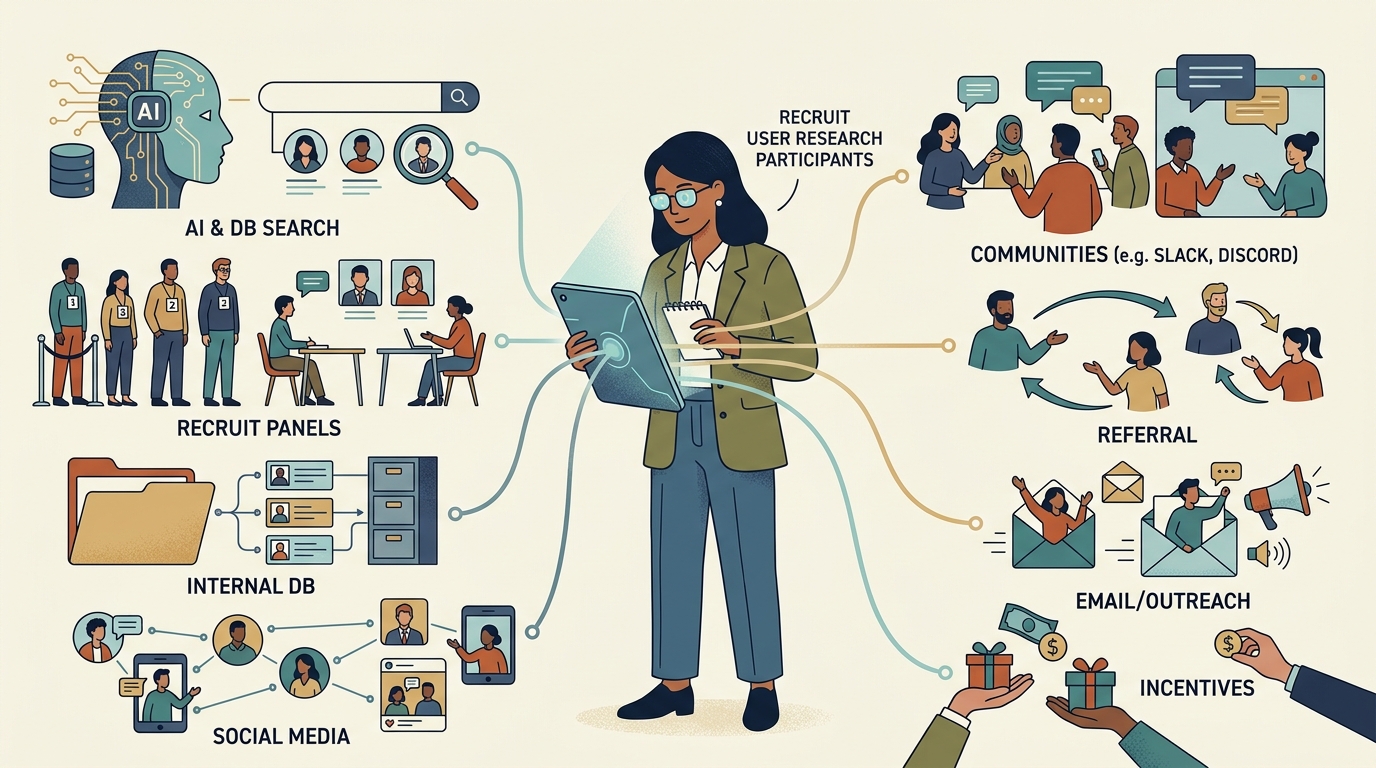
TL;DR: El reclutamiento de participantes para investigación de usuarios es el mayor cuello de botella en la investigación de UX y productos — no el diseño del estudio, no el análisis. Ocho canales realmente funcionan en 2026: la búsqueda de personas impulsada por IA (la más rápida para nichos/B2B), paneles de investigación de usuarios (UserInterviews, Respondent, dscout), comunidades, tu CRM, LinkedIn, boletines, grupos internos y referencias. Esta guía clasifica cada uno por velocidad, costo y alcance de audiencia, muestra las tasas de incentivo que obtienen respuestas y explica el diseño de filtros para que dejes de desperdiciar sesiones en encuestados profesionales.
Pregunta a cualquier investigador de UX qué es lo que más los ralentiza y la respuesta es casi siempre la misma: el reclutamiento de participantes para investigación de usuarios. El diseño del estudio es difícil pero acotado. El análisis es difícil pero predecible. El reclutamiento es la parte donde un plan de lunes se convierte en una excusa de viernes, porque no puedes realizar un estudio sin las personas adecuadas en el calendario — y las personas adecuadas suelen estar ocupadas, ser de nicho y escépticas ante otra "charla rápida."
Esta guía es el manual del operador para el reclutamiento de participantes para investigación de usuariosen 2026. Cubrimos ocho canales con plazos y costos realistas, cuánto pagar a participantes de consumo vs. empresariales, cómo filtrar fraudes y cómo la búsqueda de personas impulsada por IA ha cambiado las reglas del juego para audiencias B2B difíciles de alcanzar. Combina esto con labiblioteca de métodos de investigación de Nielsen Norman Group para el lado metodológico.
Por Qué Reclutar Participantes de Calidad es la Parte Más Difícil de la Investigación de UX
P: ¿Por qué el reclutamiento de participantes para investigación de usuarios es el cuello de botella? Porque las personas a las que es fácil llegar no suelen ser las personas con las que realmente necesitas hablar. Los paneles de consumo generalistas están saturados de encuestados profesionales; tu CRM solo conoce a usuarios que ya te aman; y la audiencia de nicho que necesitas — CISOs de seguridad, enfermeras de UCIN, pequeños agricultores en Kenia — rara vez está indexada por alguien.
Cuatro presiones se combinan a la vez. Velocidad: los plazos de los productos se comprimen, por lo que una lista de espera de dos semanas en un panel mata el sprint. Especificidad: cuanto más útil sea el estudio, más estrecha será la definición de la audiencia, y las audiencias estrechas son exponencialmente más difíciles de obtener.Sesgo: recluta de un solo canal y tu muestra heredará el sesgo de ese canal (los usuarios de Reddit no son el público en general; tu lista beta no es tu futura base de clientes). Costo: los incentivos, las tarifas del panel y las horas de investigación dedicadas a perseguir a los que no se presentan se suman más rápido de lo que la mayoría de los equipos planean.
El resultado: la mayoría de los equipos de investigación dedican entre el 40% y el 60% del tiempo del proyecto solo al reclutamiento de participantes para investigación de usuarios. La encuesta del blog de investigación de usuarios de UserInterviews señala rutinariamente el reclutamiento como la principal causa de los retrasos en los proyectos. Ese número no es solo un problema de herramientas — es un problema de abastecimiento. Cada canal tiene un perfil diferente de velocidad/calidad/costo, y la decisión correcta depende de a quién necesites.
La solución no es elegir un canal perfecto. Es conocer los ocho, adaptarlos al estudio y construir relaciones previas para que el próximo estudio no empiece de cero. Eso es lo que te ofrece el resto de esta guía.
8 Métodos para Reclutar Participantes para Investigación de Usuarios
P: ¿Qué método debo usar para el reclutamiento de participantes para investigación de usuarios? Depende de la audiencia. Para participantes de nicho o B2B, la búsqueda de personas con IA gana en velocidad. Para estudios de consumo con criterios amplios, los paneles siguen siendo los más baratos. Para profundidad longitudinal o cualitativa, tu propio CRM o listas de la comunidad superan a ambos. A continuación, se presentan los ocho canales que realmente funcionan en 2026, ordenados aproximadamente por velocidad de primera sesión.
Método 1: Herramientas de Búsqueda de Personas Impulsadas por IA. La opción más nueva. Las plataformas de búsqueda de personas impulsadas por IA y herramientas como LinkedIn Sales Navigator te permiten describir al participante en lenguaje natural — "gerentes de producto en startups fintech Serie B en EE. UU. que han lanzado una característica de cumplimiento en el último año" — y devolver listas verificadas con correos electrónicos en minutos. Lo mejor para audiencias B2B, profesionales o definidas por el comportamiento que los paneles tradicionales no indexan. El costo suele ser una tarifa plana, no por participante, lo que cambia la economía unitaria en estudios de N pequeño.
Método 2: Paneles de Investigación de Usuarios. Servicios como UserInterviews, Respondent y dscout mantienen grupos de participantes opt-in y gestionan la selección, programación y desembolso de incentivos. El costo es de aproximadamente $30-80 por participante de consumo además del incentivo, y $150-300+ para roles más difíciles de alcanzar. Lo mejor cuando la audiencia está ampliamente definida y el volumen justifica el recargo. Ten cuidado con el problema del encuestado profesional (ver Método 4 a continuación).
Método 3: Comunidades y Redes Sociales. Reddit, servidores de Slack/Discord de nicho, Twitter/X y grupos de Facebook específicos por tema. Gratis en la fuente, pero requiere tiempo: cada comunidad tiene sus propias reglas, guardianes y tolerancia a las publicaciones de "encuestas rápidas". Funciona mejor cuando participas auténticamente antes de preguntar. Reddit y Discord tienden a ser más jóvenes y técnicos; los grupos de Slack especializados (por ejemplo, People Geeks, Mind the Product) ofrecen participantes B2B de alta calidad si eres un miembro de buena reputación.
Método 4: Listas de Clientes Existentes. Tu CRM, base de datos de productos o cola de soporte. Gratis, rápido y de alta confianza — pero sesgado hacia usuarios que ya interactúan. Útil para estudios de usabilidad y retroalimentación de productos, peligroso para la investigación de trabajos por hacer donde también necesitas no usuarios y usuarios que se han dado de baja. Siempre muestrea entre cohortes (nuevos, activos, dados de baja, nunca activados) en lugar de bombardear a tus usuarios avanzados.
Método 5: LinkedIn + Redes de la Industria. Alcance manual o asistido por Sales-Nav. Lento pero flexible: puedes segmentar por empresa, cargo, antigüedad, nivel de experiencia y habilidades. Las tasas de respuesta son del 5-15% para el alcance en frío con un incentivo claro. Combínalo con una herramienta de búsqueda de correo electrónico para evitar el impuesto de InMail y llegar directamente a las bandejas de entrada.
Método 6: Boletines por Correo Electrónico y Listas Beta. Una sola línea en tu propio boletín ("Estamos realizando sesiones de investigación de 30 minutos la próxima semana — tarjeta de regalo de Amazon de $75 si calificas") a menudo supera a los paneles pagados para audiencias cálidas. La promoción cruzada en boletines adyacentes funciona para audiencias de nicho B2C. Rastrea qué listas ofrecen la tasa de aprobación de filtros más alta; ese es tu canal reutilizable.
Método 7: Grupo Interno y Amigos de Amigos. Construye un panel de investigación de tus propios usuarios opt-in con el tiempo — este es el movimiento a largo plazo de mayor apalancamiento. Cada estudio debe terminar con una casilla de verificación "¿participarías de nuevo?". El reclutamiento de amigos de amigos (pedir a los participantes que reenvíen tu filtro a un contacto calificado) amplía el alcance sin adquisición pagada, especialmente para temas sensibles donde los extraños no aparecerán.
Método 8: Referencias y Muestreo en Bola de Nieve. Particularmente poderoso para grupos difíciles de alcanzar: inmigrantes indocumentados, adictos en recuperación, ejecutivos que filtran todo contacto en frío. Una introducción de confianza supera cien mensajes en frío. Paga un bono por referencia (a menudo $25-50) además del incentivo del participante. Las muestras en bola de nieve están sesgadas por naturaleza — trátalas como profundidad cualitativa, no como amplitud representativa.
Por Qué las Herramientas de "Encontrar a Cualquiera" Funcionan para Audiencias Difíciles de Alcanzar
La razón por la que el reclutamiento de nicho falla tan a menudo no es una brecha de herramientas — es un desajuste de fuentes. Los paneles de investigación mantienen grupos de personas que han optado por realizar estudios pagados. Esa es una audiencia real, pero se define por la voluntad de participar, no por el trabajo, habilidad o experiencia específicos que tu estudio necesita. Si tu resumen dice "50 ingenieros con tres o más años de experiencia en PostgreSQL de producción en empresas SaaS de 50-200 personas", ningún panel tiene ese segmento preconstruido. La lista de espera es esencialmente infinita.
Las herramientas de búsqueda de personas de propósito general invierten el problema. En lugar de esperar a que la persona adecuada se una a un panel, buscas en el gráfico profesional más amplio por puesto de trabajo, tamaño de la empresa, ubicación, habilidad y otros filtros combinables —de la misma manera que un reclutador buscaría candidatos. El resumen anterior se convierte en una lista en una tarde en lugar de un proyecto de abastecimiento de 1-2 semanas. La desventaja: tú haces el alcance y el diseño de incentivos, ya que estos contactos no han aceptado previamente la investigación. Para estudios cualitativos de N pequeño con criterios precisos, ese intercambio suele valer la pena.
Incentivos que Realmente Funcionan (y Cuánto Pagar) para el Reclutamiento de Participantes para Investigación de Usuarios
P: ¿Cuánto debo pagar a los participantes? Ajusta la tarifa al costo de oportunidad del participante, no a tu presupuesto de investigación. Un estudiante universitario y un CIO de hospital no son la misma hora — y pagar poco a las audiencias B2B senior es la razón número uno por la que las tasas de no presentación se disparan por encima del 30%.
A continuación se muestran las bandas de tarifas de 2026 que consistentemente producen tasas de confirmación del 80%+ y menos del 15% de no presentaciones. Estos son pagos a los participantes, excluyendo los recargos del panel o las tarifas de la plataforma.
Consumidor / público en general. Entrevista de 30 minutos: $30-50. Entrevista de 60 minutos: $50-100. Estudio de diario o tarea de una semana: $100-200. Prueba de usabilidad no moderada (15 min): $10-20.
Roles profesionales / prosumidores. Diseñadores, desarrolladores, especialistas en marketing, clínicos, profesores. 30 min: $75-150. 60 min: $150-250. Multisesión: $300-500. Los roles especializados con credenciales (por ejemplo, terapeutas con licencia) tienden hacia la parte superior de cada banda.
C-suite / tomadores de decisiones senior. 30 min: $250-400. 60 min: $400-750+. Muchos rechazarán el efectivo por completo y aceptarán donaciones a organizaciones benéficas de valor equivalente en su lugar — pregunta, y ten una organización benéfica predeterminada lista.
La elección de la moneda importa. Las tarjetas de regalo de Amazon siguen siendo las más flexibles para estudios globales. PayPal funciona para participantes no bancarizados o internacionales. Los equivalentes en efectivo (tarjetas prepago Visa) son los mejores para estudios sujetos a auditoría de cumplimiento. Evita el crédito bloqueado por la plataforma (por ejemplo, créditos de tu propio producto) — reduce las tasas de respuesta entre un 20% y un 40% según nuestra experiencia.
Paga rápidamente. El desembolso de incentivos el mismo día o en 48 horas es el mayor impulsor de la participación repetida. Los pagos lentos de incentivos son la queja más común en las revisiones de calidad de los paneles — un pago rápido convierte a los encuestados únicos en un grupo continuo al que puedes volver a dirigirte.
Filtrado: Cómo Evitar a los "Encuestados Profesionales"
P: ¿Cómo sé si los participantes son reales? Construye un filtro que cueste más tiempo falsificar de lo que paga en incentivo. Los encuestados profesionales optimizan la velocidad de pago— la ambigüedad, el texto abierto y las comprobaciones de coherencia elevan su costo de fraude por encima del umbral en el que vale la pena su tiempo.
Reglas de diseño del filtro. Mantenlo por debajo de 15 preguntas o 5 minutos, lo que sea más corto. Empieza con preguntas de filtrado, no demográficas — quieres que los encuestados no calificados se retiren rápidamente. Oculta qué respuestas califican incluyendo distractores plausibles (si "usar Salesforce diariamente" califica, también ofrece "usar HubSpot diariamente," "usar Zoho diariamente," etc.).
Comprobaciones de fraude de texto abierto. Una pregunta obligatoria de texto abierto (por ejemplo, "Describe una ocasión específica en la que usaste [herramienta] la semana pasada") detecta al 80%+ de los encuestados profesionales. Sus respuestas son cortas, genéricas o copiadas. Los usuarios reales dan detalles específicos e idiosincrásicos.
Señales de alerta durante el filtrado. Patrones sospechosos: completado en menos de 90 segundos, IP/dispositivo duplicado entre encuestados "diferentes", respuestas demográficas que contradicen las respuestas de filtrado, perfil de LinkedIn que no coincide con el rol declarado, dominios de correo electrónico genéricos para lo que debería ser un rol corporativo.
Señales de alerta durante la sesión. Cámara permanentemente apagada cuando se acordó el video, la voz no coincide con el género o rango de edad autoinformado, lagunas fácticas sobre el rol declarado (un "contador senior" que no puede describir su proceso de cierre), leyendo respuestas de un guion. Termina con educación, documenta, niega el incentivo y marca el canal de origen.
Crea una lista negra. Mantén una lista de correos electrónicos, números de teléfono y cuentas de Stripe/PayPal que hayas marcado. Compártela entre estudios en la misma organización. Los encuestados profesionales reciclan las mismas cuentas; una detección en el filtro elimina futuros desperdicios.