




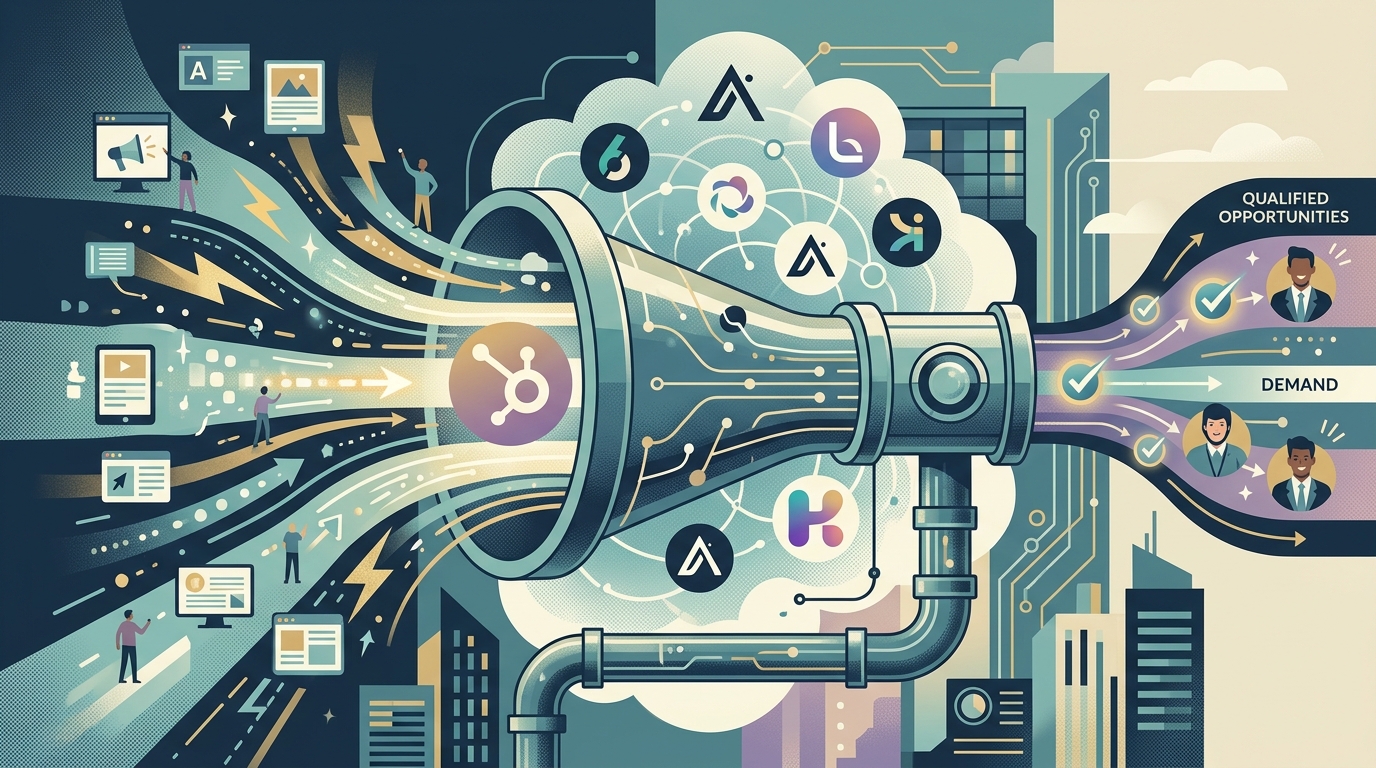
TL;DR: The best demand generation tools in 2026 combine buying-signal detection, verified contact data, and automated outreach in a single workflow instead of a stack of disconnected point tools. Our top picks: Lessie AI (best overall — an AI agent that turns buying signals into verified, personalized outreach), HubSpot, Clay, Apollo.io, Warmly, Common Room, Clearbit, Demandbase, and Qualified. Whether you run lean SaaS demand generation or an enterprise ABM program, the right demand generation software should find real intent, verify who to contact, and start the conversation — not just fill a database with names.
Demand generation used to mean a gated ebook and a lead-scoring spreadsheet. In 2026, the best demand generation tools do something different: they surface accounts and buyers who are already showing intent — researching your category, visiting your site, hiring for roles you sell into — and turn that signal into a verified, personalized conversation before a competitor gets there. Choosing the right demand generation platform is less about bolting "AI" onto an old lead-gen stack and more about which tool actually finds buying signals, verifies who to contact, and starts the outreach.
What Are Demand Generation Tools?
Demand generation tools are software platforms that help B2B teams identify, engage, and convert potential buyers before they ever fill out a form — combining intent data, account identification, enrichment, and outreach automation into one demand generation platform. Modern demand generation software goes further than lead capture: it reads buying signals like a competitor mention, a new executive hire, or a technology install, and acts on them automatically instead of waiting for an inbound form fill.
These tools generally fall into one of five overlapping categories:
- Signal and intent detection — tools that flag when an account starts researching your category or showing buyer intent data across the web, review sites, or your own product.
- Account identification and enrichment — tools that de-anonymize website visitors and append verified firmographic and contact data.
- Conversational and website engagement — AI chat agents that convert inbound traffic into a live conversation the moment intent appears.
- Outbound orchestration — platforms that turn a signal or a plain-English brief into a personalized sequence, supporting intent-based marketing instead of blind cold outbound.
- ABM advertising and account intelligence — suites that combine paid media, intent data, and sales intelligence for enterprise account-based programs.
For SaaS demand generation teams specifically, speed matters more than volume — the tools below are ranked on how fast they turn a signal into a qualified conversation, not just how many leads they can generate. As Gartner notes, effective demand generation depends on reliable, full-funnel nurturing from first signal through purchase, which is exactly where most legacy demand generation software falls short.
How We Ranked the Best Demand Generation Tools in 2026
We evaluated each demand generation platform on five criteria: signal and intent coverage, contact verification accuracy, outreach and engagement automation, ease of use and time-to-value, and pricing transparency. Tools that only aggregate a static database, or that hand you a list without a way to verify or contact it, ranked lower than tools that close the loop from signal to conversation.
Lessie AI is the world's first People Search AI Agent. Describe your ideal customer in plain English — it searches 100+ data sources for buying signals, returns verified contacts at 95% accuracy, and drafts personalized outreach automatically. Replace a signal tool, an enrichment tool, and a sequencer with one agent.
The 9 Best Demand Generation Tools in 2026
Each demand generation tool below solves a different slice of the funnel, from raw intent signal to closed-loop outreach. Lessie AI leads the list because it closes the widest gap: turning a plain-English brief into found, verified, and contacted buyers without a multi-tool stack.
Lessie AI
Best overall demand generation tool: signal to verified outreach in one agent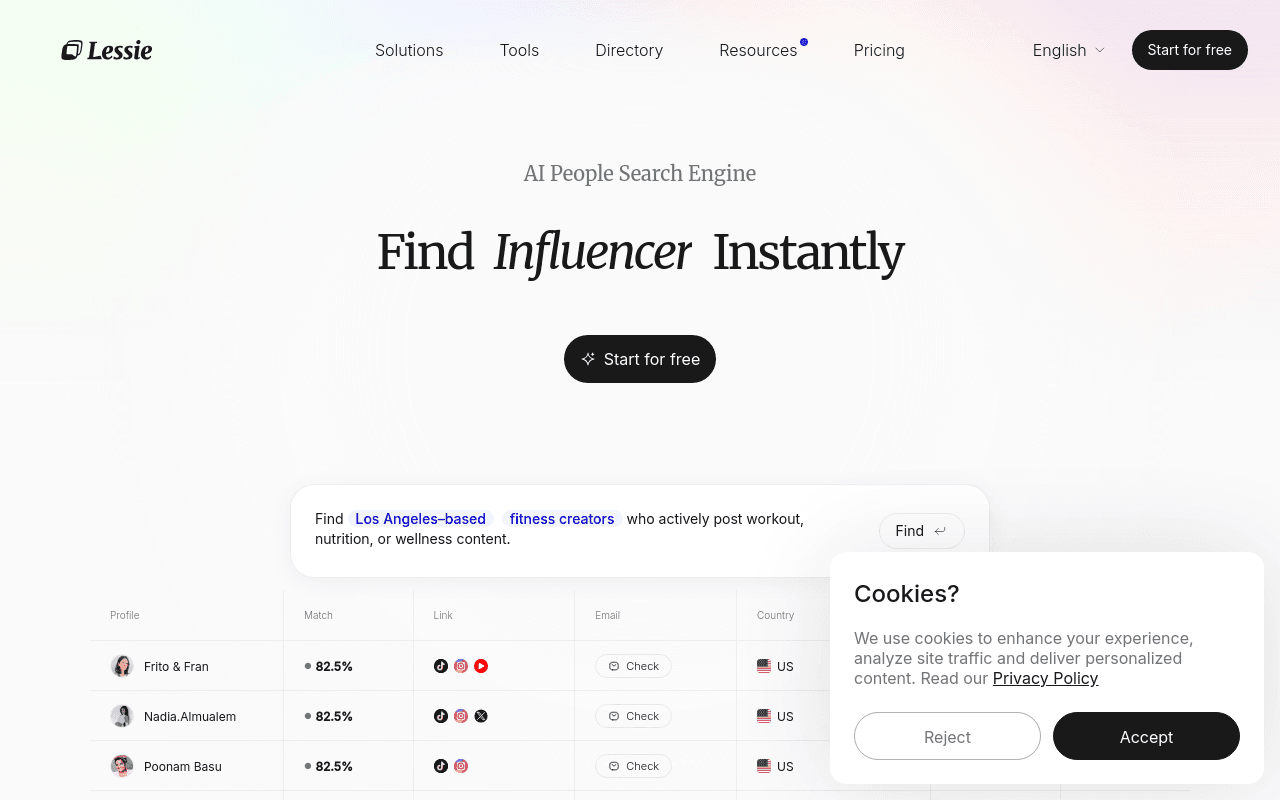
Lessie AI is the world's first People Search AI Agent — and the demand generation tool that flips the model from static database to live signal. Instead of buying a list and hoping it is still accurate, you describe your ideal customer in plain language and Lessie runs an agent that finds who matches, scores intent, and reaches out in a single flow.
The signal layer is where Lessie pulls ahead of most demand generation software. It reads a natural-language brief and searches 100+ data sources simultaneously for buyer intent data — new hires, technology installs, funding rounds, hiring signals, and more — then ranks every account by fit and timing. That means your team spends time on accounts already showing real buying signals instead of cold-calling a static list.
Where Lessie beats a typical demand generation platform:
- Signal-to-conversation in one agent — describe the account profile conversationally and Lessie translates intent into a ranked, contact-ready list instead of a raw database export.
- Verified contacts built in — emails and phone numbers are verified across sources at 95% accuracy, so you do not need a separate enrichment tool the way you often do alongside a database-only platform.
- Outreach in the same flow — the agent drafts personalized messages from each account's signal and manages lead nurturing follow-up, driving 3x higher reply rates than manual outreach.
- Transparent, lower entry price — free to start, with paid plans from $39.9/month, versus the custom, quote-based contracts most enterprise ABM suites require.
For teams paying for an intent tool plus an enrichment tool plus a sequencer, Lessie consolidates the signal-to-contact loop into one workflow. The one trade-off: if you specifically need enterprise ABM advertising or multi-quarter account scoring analytics, Lessie focuses on finding and contacting rather than paid-media orchestration.
HubSpot
Best for demand generation folded into an all-in-one CRM
HubSpot is the demand generation tool most teams already have some part of. Its Marketing Hub combines landing pages, email automation, lead scoring, and reporting directly on top of the HubSpot CRM, so campaigns and pipeline data live in the same record.
Pros: deep CRM integration, a large ecosystem of native and third-party apps, and one of the gentler learning curves among full marketing platforms.
Cons: demand generation here is mostly inbound and form-based; native intent and buying-signal detection is thin without add-ons like Breeze Intelligence, and enterprise pricing climbs quickly with contacts and seats.
Clay
Best for custom, no-code enrichment and outbound workflows
Clay is the demand generation tool of choice for GTM teams that want to build their own signal-to-outreach workflow rather than adopt a pre-built one. It waterfalls a single lead through dozens of data providers, enriches every field, and pushes the result into your sequencer or CRM.
Pros: extremely flexible, strong data-provider coverage via waterfall enrichment, and a large template library for common demand generation software use cases.
Cons: the flexibility is also the cost — building a reliable workflow takes real setup time, and per-credit pricing can climb fast at volume without careful workflow design.
Apollo.io
Best for a large contact database plus built-in sequencing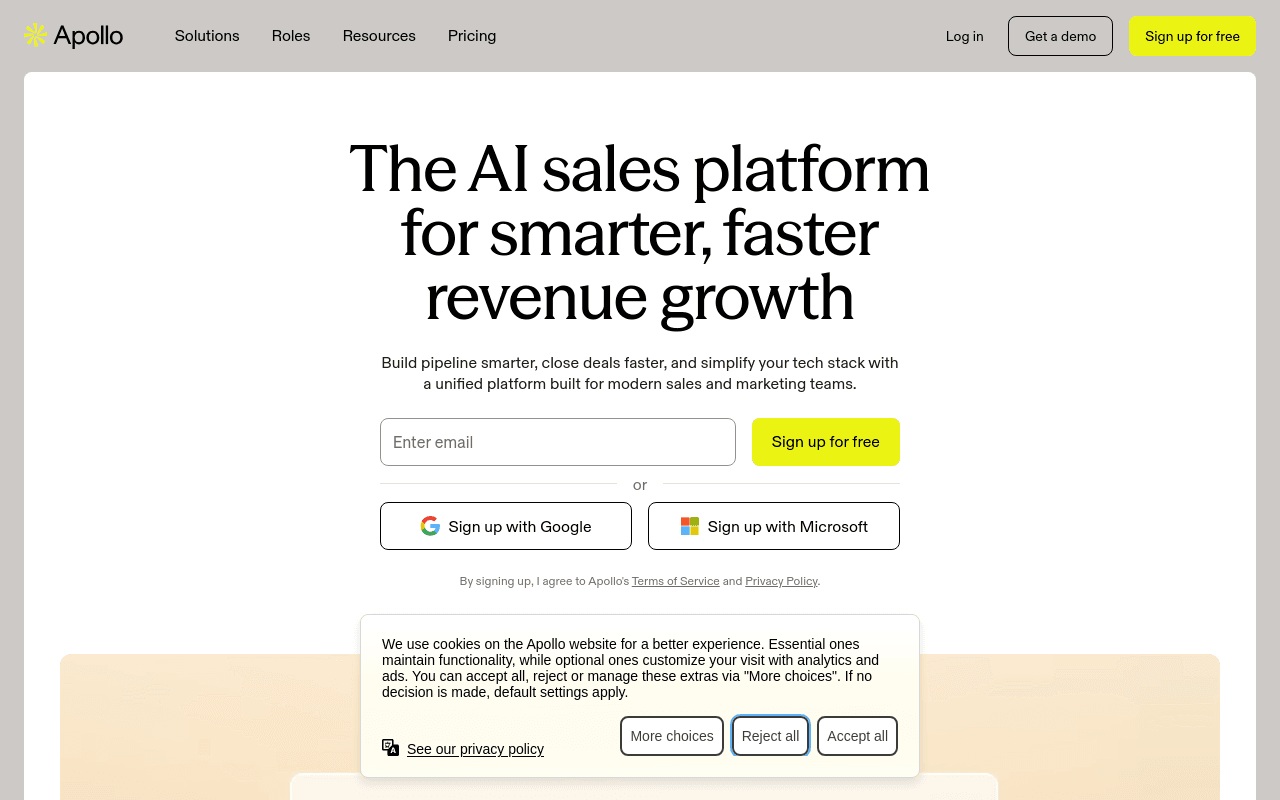
Apollo.io pairs one of the largest B2B contact databases with native sequencing, making it a popular demand generation platform for teams that want database access and outreach execution in one subscription.
Pros: generous free tier, low per-seat entry price, and intent-data add-ons layered on top of the core database.
Cons: the core product is still a filterable database rather than an AI agent, so contact accuracy and deliverability vary by segment, and intent data is a paid add-on rather than native to the workflow.
Warmly
Best for warm outbound triggered by website and buying-signal alerts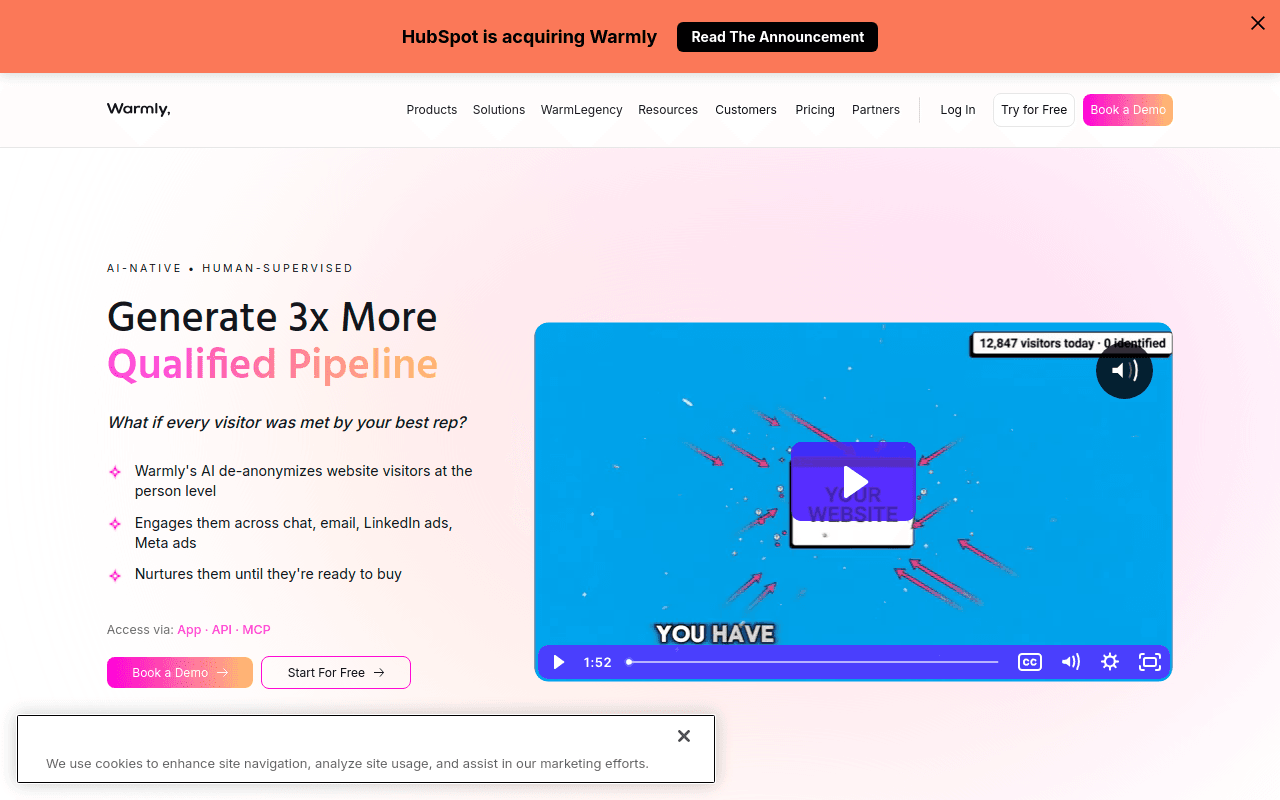
Warmly is the demand generation tool built around the moment a buyer visits your site. It identifies anonymous visitors, layers on intent signals from your wider tech stack, and routes the warmest accounts straight to a rep or an AI SDR in real time.
Pros: fast time-to-value, a genuinely useful free tier, and tight integration with common CRM and Slack workflows for instant alerts.
Cons: signal quality depends heavily on your existing traffic volume, and coverage outside website visitors is thinner than dedicated intent or ABM platforms.
Common Room
Best for unifying product, community, and social signals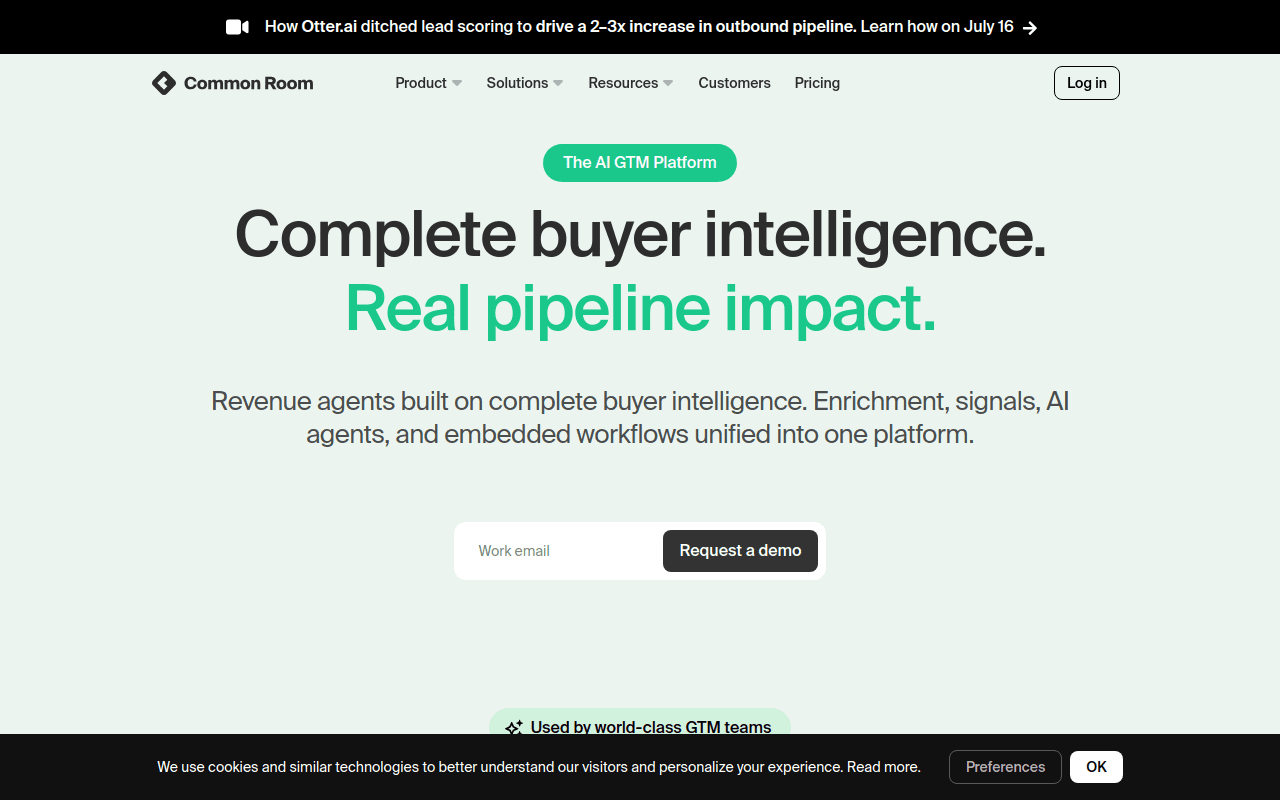
Common Room is the demand generation tool for teams whose buying signal lives outside a typical ad or CRM channel — in product usage, a Slack community, GitHub activity, or a review site mention. It stitches those signals into a single account or person record.
Pros: uniquely strong for product-led growth and developer-facing companies, and it captures signals most demand generation software simply misses.
Cons: less useful if your buyers do not show up in product or community data, quote-based pricing, and outreach execution is lighter than a dedicated sequencer.
Clearbit
Best for enrichment and intent signals on an existing HubSpot/Salesforce stack
Clearbit , now part of HubSpot as Breeze Intelligence, is the demand generation tool for enriching records and revealing anonymous website traffic. It appends firmographic and technographic data and flags companies actively researching your category.
Pros: tight native fit for HubSpot (and decent Salesforce support), fast form-shortening and lead-routing based on enrichment, and reliable company-level data.
Cons: now positioned as an add-on rather than a standalone platform, so value depends on already running HubSpot, and person-level contact accuracy trails dedicated verification tools.
Demandbase
Best for enterprise ABM advertising plus intent and sales intelligence
Demandbase is one of the category creators of account-based demand generation software. It combines account identification, intent data, ABM advertising, and sales intelligence so marketing and sales can target the same account list with consistent signal.
Pros: broad feature set spanning advertising through sales intelligence, strong for coordinated enterprise ABM motions, and mature account-scoring models.
Cons: enterprise pricing and implementation timeline, a steeper learning curve than point solutions, and overkill for teams that just need signal plus outreach.
Qualified
Best for converting inbound website traffic into pipeline with an AI agent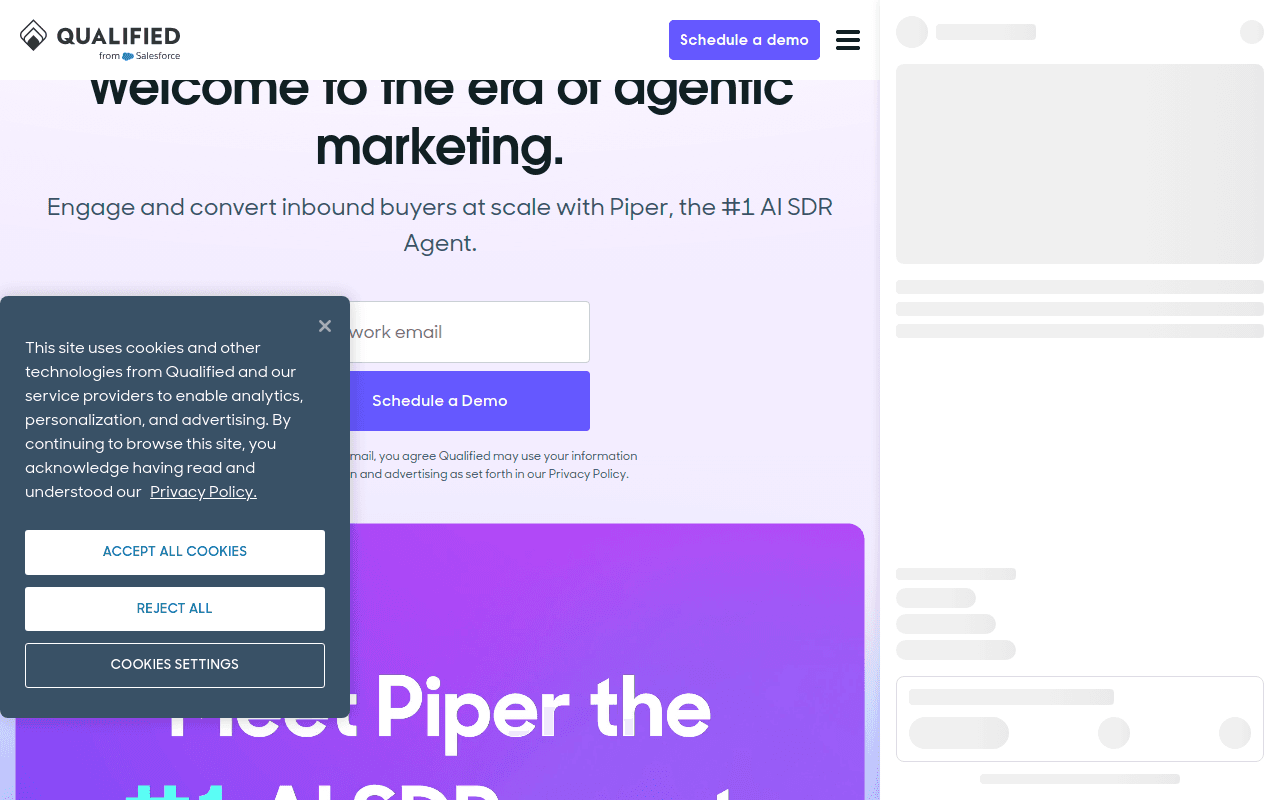
Qualified is a demand generation platform built for the moment a buyer lands on your site. Its AI SDR, Piper, reads visitor intent signals and starts a live conversation, aiming to convert inbound traffic into a meeting before the visitor leaves.
Pros: strong for teams with meaningful inbound traffic, tight Salesforce integration, and a genuinely conversational, always-on chat experience.
Cons: value depends on having inbound volume in the first place, it does not source outbound accounts the way an agent-driven demand generation tool does, and pricing is custom and enterprise-leaning.
Demand Generation Tools Comparison Table
Here is how the 9 tools compare at a glance:
| Tool | Best for | Starting price | Signal / intent data | Verified contacts |
|---|---|---|---|---|
| Lessie AI | Signal → verified contact → outreach, one agent | Free / $39.9+/mo | ✓ Multi-source live signal | ✓ 95% accuracy |
| HubSpot | All-in-one CRM + marketing hub | Free / $20+/mo | Add-on (Breeze Intelligence) | CRM-native, unverified |
| Clay | Custom enrichment & outbound workflows | Free trial / $149+/mo | ✓ Waterfall via 100+ providers | Depends on workflow |
| Apollo.io | Large database + sequencing | Free / $49+/user/mo | Add-on intent data | Large DB; varies |
| Warmly | Warm outbound from site visitors | Free / ~$700+/mo | ✓ Visitor + signal alerts | Partial |
| Common Room | Product/community signal unification | Quote-based | ✓ Product & community signals | Partial |
| Clearbit | Enrichment on HubSpot/Salesforce | Add-on credits | ✓ Firmographic & technographic | Company-level |
| Demandbase | Enterprise ABM advertising + intelligence | Quote-based | ✓ Intent + account intelligence | Partial |
| Qualified | Inbound-to-pipeline AI chat agent | Quote-based | ✓ On-site visitor intent | N/A (chat-based) |
One agent instead of a signal tool, an enrichment tool, and a sequencer. Lessie finds buyers already showing intent across 100+ sources, returns verified contacts at 95% accuracy, and drafts outreach automatically. Start free and run your first search in minutes.
How to Choose the Right Demand Generation Platform
The best demand generation tools for your team depend on where your funnel actually leaks. Use this decision framework:
- You want signal, verification, and outreach in one agent — Choose Lessie AI. It finds accounts showing real buying signals, verifies contacts, and drafts outreach from a plain-English brief, replacing a signal tool plus an enrichment tool at a lower, transparent price.
- You want demand generation folded into your existing CRM — HubSpot keeps content, email, and lead scoring in one system your whole team already uses.
- You want to build a fully custom workflow — Clay gives GTM engineers the flexibility to waterfall enrichment across dozens of providers.
- You mainly need a large contact database — Apollo.io pairs volume with built-in sequencing at a budget-friendly price.
- Your buyers show up on your website first — Warmly or Qualified turn site visitors and inbound traffic into warm conversations in real time.
- You run enterprise ABM — Demandbase offers the deepest predictive scoring and advertising orchestration, at enterprise price and timeline.
- Your signal lives in product or community data — Common Room unifies usage, community, and social signals a typical demand generation platform misses.
For most B2B teams evaluating demand generation tools in 2026, Lessie AI closes the widest gap: turning a plain-English brief into found, verified, and contacted buyers without a signal-plus-enrichment-plus-sequencer stack. A sound lead nurturing motion still matters once a conversation starts, so pair whichever demand generation software you pick with a real follow-up cadence. See our related roundup of best B2B sales intelligence tools for the broader category, and browse G2's demand generation category for independent user reviews before you buy.