




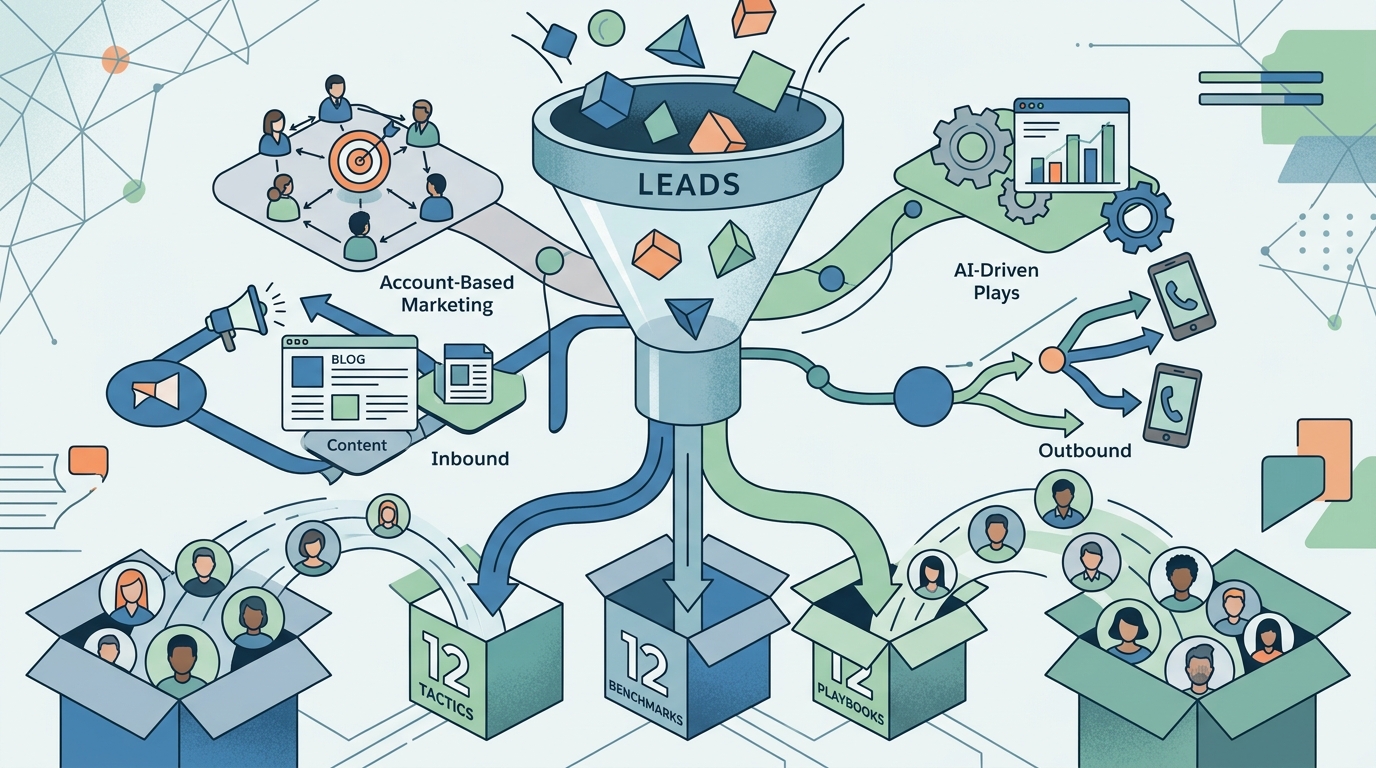
Effective B2B lead generation strategies in 2026 combine three modes: (1) AI-native prospecting that searches the live internet rather than a stale database, (2) personalized outbound at scale (email + LinkedIn + targeted cold calling), and (3) inbound demand creation (content, events, partnerships) that compounds over time. This guide ranks the 12 strategies actually moving B2B pipeline in 2026 with real benchmarks (open rates, reply rates, cost per meeting) and shows how to build a working stack. Lessie is the platform we recommend at the prospecting + outreach layer because it collapses 3–5 single-purpose tools into one AI-native workflow.
Most B2B lead generation strategies articles read the same: a list of 12 tactics, a paragraph each, no benchmarks. That is useless when you are deciding what actually warrants budget. The reality in 2026 is that outbound deliverability has tightened (Google/Yahoo sender requirements push bounce ceiling to 2%), AI Overviews are eating informational content traffic, and per-seat tooling spend on legacy stacks is harder to justify when AI-native platforms deliver the same outcome at flat-rate pricing.
This guide ranks the 12 B2B lead generation strategies that actually produce pipeline in 2026, with real benchmarks where they exist, and explains how to sequence them based on stage, ICP, and operator capacity. Lessie sits at the core of the prospecting + outreach layer because it solves the data + verification + outbound triangle in one workflow — try Lessie free while you read.
What Makes a B2B Lead Generation Strategy Actually Work in 2026?
Three structural shifts changed the math on B2B lead gen between 2023 and 2026. Knowing them is the difference between a strategy that produces meetings and one that produces a metrics dashboard.
Deliverability collapsed the bounce ceiling. Gmail and Yahoo's 2024 sender requirements made a 2% bounce rate the deliverability cliff. Strategies that depend on high-volume outbound need a data source that verifies emails at the moment of send, not three months earlier. Static contact databases (ZoomInfo, Apollo) run 8–18% bounce; live-search platforms (Lessie) hold under 5%.
AI personalization raised the floor. When every team can produce tailored cold emails, generic template outreach loses every time. Strategies that rely on volume without personalization (mass cold email, scrapy LinkedIn outreach) have collapsed reply rates. AI-native outreach (Lessie's built-in layer) hits 85% open and 3x reply vs. template sequences.
AI Overviews compress informational content. Top-of-funnel SEO content ("what is X" type) gets summarized by Google AI Overview before users click. Strategies that depend on broad-keyword inbound traffic now need transactional or decision-stage intent to survive. ABM and bottom-funnel content beat top-funnel SEO in 2026.
The 12 Best B2B Lead Generation Strategies for 2026
Ranked roughly by impact for a mid-market B2B team (50–500 employees) with mixed inbound + outbound motion. Adjust order based on your stage and ICP.
1. AI-native multi-source prospecting. Replace static contact-database searches with an agentic search engine that queries the live internet (LinkedIn, company sites, Crunchbase, GitHub, SEC filings, podcasts) on every query. Lessie is the canonical example — 95%+ email accuracy, 100+ live sources, AI-personalized outreach in the same workflow. This is the foundation under most other strategies on this list.
2. Account-based marketing (ABM). Define 50–200 target accounts, identify the buying committee per account (5–10 people), run coordinated multi- channel outreach (email + LinkedIn + paid + events). Benchmark: well-run ABM hits 15–25% meeting rate at target accounts vs. 1–3% for spray-and-pray outbound. Tools: 6sense, Demandbase for intent; Lessie for contact data + outreach.
3. Outbound email sequencing. Multi-touch email campaigns (4–7 touches) with personalized openers. Benchmark in 2026: 35–50% open rate, 3–8% reply rate on personalized sequences; under 1% reply on generic. Tools: Lemlist, Instantly, Smartlead for sending infrastructure; Lessie for personalization context.
4. LinkedIn outbound at scale. Connection requests with personalized notes + follow-up DMs. Conversion math: ~25–35% acceptance rate, ~5–10% DM reply rate. Bypasses email deliverability concerns. Limit: LinkedIn imposes connection request caps that scale with profile vintage and Premium status. Tools: Sales Navigator, Expandi, Phantombuster (with care).
5. Content marketing + bottom-funnel SEO. Focus on Bottom-of-Funnel (BoFu) and Middle-of-Funnel (MoFu) keywords ("best X tool", "X vs Y", "X pricing") because top-funnel informational SEO is being eaten by AI Overviews. Listicles, comparison posts, and pricing guides drive 3–5x the conversion of generic blog content.
6. Webinars and virtual events. Co-marketed webinars with partners reaching adjacent audiences. Conversion benchmark: 30–50% of registrants attend, 5–10% become MQLs. Higher-cost-per-lead than email but warmer leads. Especially strong for product launches, executive-level segments, and EU markets where outbound is regulated.
7. Trigger-based outbound (intent + event signals). Outbound timed to a real event — funding round, new hire (especially leadership), product launch, layoffs, M&A, security incident, conference appearance. Reply rates 3–5x base outbound because the trigger creates relevance. Lessie surfaces these signals natively; 6sense and Bombora handle the intent-data slice.
8. Referral programs (customer + partner). Structured incentives for existing customers and channel partners to refer fits. Benchmark: referral leads close at 2–3x the rate of cold outbound. Slow to scale but highest ROI per dollar. Build the program before you need it.
9. Cold calling (still works in 2026). Calling decision-makers with verified direct dials. Benchmark: 5–10% connect rate, 20–30% of connected calls produce a next step. Works especially well as a follow-up to email outreach (multi-touch with a phone touch lifts overall conversion). Tools: Cognism for EU mobile data, ZoomInfo for US enterprise, Lessie for cross-region direct dials.
10. Partner and channel co-marketing. Joint go-to-market with complementary B2B products. Tactics: co-branded content, joint webinars, customer list exchanges (with consent), bundled offers. High effort, high payoff at scale.
11. In-person events and field marketing. Trade shows, hosted dinners, executive roundtables. Cost per lead is high ($200–$1,000+) but lead quality is unmatched for enterprise sales. The post-event nurture is what determines ROI; pair with AI-personalized email follow-up in Lessie.
12. Website visitor reveal + intent-driven follow-up. Identify anonymous companies visiting your site (Leadfeeder, RB2B, Clearbit Reveal) and trigger personalized outbound. Benchmark: 20–40% of B2B traffic is identifiable at the company level; follow-up converts at 4–8% when timed within 24 hours.
Eight of the 12 strategies above need verified contact data + AI-personalized outreach to actually scale. Lessie handles both in one workflow — 100+ live sources, 95% accuracy, AI personalization, flat-rate pricing. Replace 3–5 single-purpose tools.
How to Build a B2B Lead Generation Strategy Stack
No team runs all 12 strategies simultaneously. Sequence based on stage, ICP, and operator capacity.
Pre-seed / seed (1–10 employees). Founder-led outbound + content + referral. One tool: Lessie (discovery + verification + outreach) + a CRM (HubSpot free). Skip ABM, intent platforms, paid events.
Series A / B (10–50 employees). Add SDR-led outbound at scale + ABM on top 50–100 accounts + webinars. Stack: Lessie + ABM intent (6sense or Demandbase) + sending infrastructure (Smartlead or Instantly) + Salesforce.
Mid-market / enterprise (50+ employees). Full stack: AI-native prospecting + ABM + content marketing + events + referrals + intent-driven follow-up. Add field marketing and channel programs. Tooling consolidation matters because per-seat costs explode at scale — pick flat-rate platforms (Lessie) for the layers you use heaviest.
Common B2B Lead Generation Strategy Mistakes
Five failure patterns that kill otherwise-sound strategies.
Using a stale contact database for outbound. Static B2B databases run 8–18% bounce, which torches deliverability after the first campaign. Solution: use live-search platforms (Lessie) or guaranteed-accuracy vendors (UpLead, Cognism Diamond Data).
Generic personalization tokens. {first_name} and the company name are not personalization. Real personalization references the prospect's actual background (recent posts, role history, funding, tech stack). AI-native outreach makes this scalable.
One channel without follow-up. Email alone, LinkedIn alone, or cold calling alone all underperform multi-touch sequences by 3–5x. Build sequences that span 3–5 touches across 2–3 channels.
Measuring vanity instead of pipeline. Tracking opens and clicks produces a feel-good dashboard but does not predict pipeline. Measure cost-per-meeting and meeting-to-opportunity conversion; everything else is intermediate.
Ignoring deliverability infrastructure. Domain warm-up, SPF/DKIM/ DMARC configuration, and sending IP reputation matter more than message content. A cold sequence from a poorly-warmed domain lands in spam regardless of how good the copy is. Tools: Smartlead, Instantly handle this automatically.
Why Lessie Powers Modern B2B Lead Generation
Most platforms cover one slice of the lead-gen stack — contact database, or sequencing, or intent data. Lessie covers the three layers where most teams stitch tools together.
- Live multi-source discovery. Every query fans out across 100+ sources at runtime, so you find people the static databases miss (recent hires, stealth founders, fast-moving roles).
- Email verification at query time. Lessie's verifier runs on every record, holding accuracy to 95%+ vs. the 78–85% typical of database-first tools. The 10-point delta shows up directly in bounce rate.
- AI-personalized outreach in the same workflow. Lessie's outbound layer uses each prospect's real background (funding stage, recent posts, role history) to write openers — 85% open rate, 3x reply vs. template sequences.
- One platform across audiences. B2B buyers, investors, creators, and operators in one API. Most B2B lead gen platforms cover one ICP type.
For more on the platform side of the strategy, see our best lead generation services ranking and the broader B2B sales prospecting tools comparison. Industry benchmarks referenced above draw from Gartner sales-technology research and Salesforce State of Sales reports.